
Purposefully I’ve not published anything for a month. I’ve been staying with a pause, my instinct is to sit in to it for August.
Last week in Scotland during a thing it was reflected back to me I use good metaphors. The week offered me plenty of different experiences which is good for neuro placidity and opening up different spaces. Once the business trip was confirmed I postponed my saturated sponge retreat. More on that later.
Staying with some fab friends at the weekend that live in Perth, Scotland I went to see the Stone of Destiny in the cities excellent museum. It was a really good recommendation. I was impressed by the artefacts, curation and displays.
The audio visual introduction to the Stone of Scone, as it’s also known, is very well done. Visually I really like the style of it. Fascinating the stone still travels to Westminster coronation ceremonies and is still sat on by monarchs of the UK.
It is the ritual entitlement to rule Scotland.
Ancient rites of Kinship in Ireland included a ceremonial marriage to the land, our banais ríghi, the marriage of our high kings of Ireland and the goddess Éiru. A ritual where they promised earth care through kingship.
I wondered about this sitting on top of a lump of rock, geomorphology as representation of all of Scotland which is dominated by huge mountain ranges. There is story of its links to Ireland and Palestine but recent scientific analysis shows this stone as being local to Scone and the river Tey. This has also been explained away with story that the original was protected and a replacement offered. Sometimes science ruins a good romantic myth.
Sitting on top of the Stone of Destiny is sacred to the Scott’s.
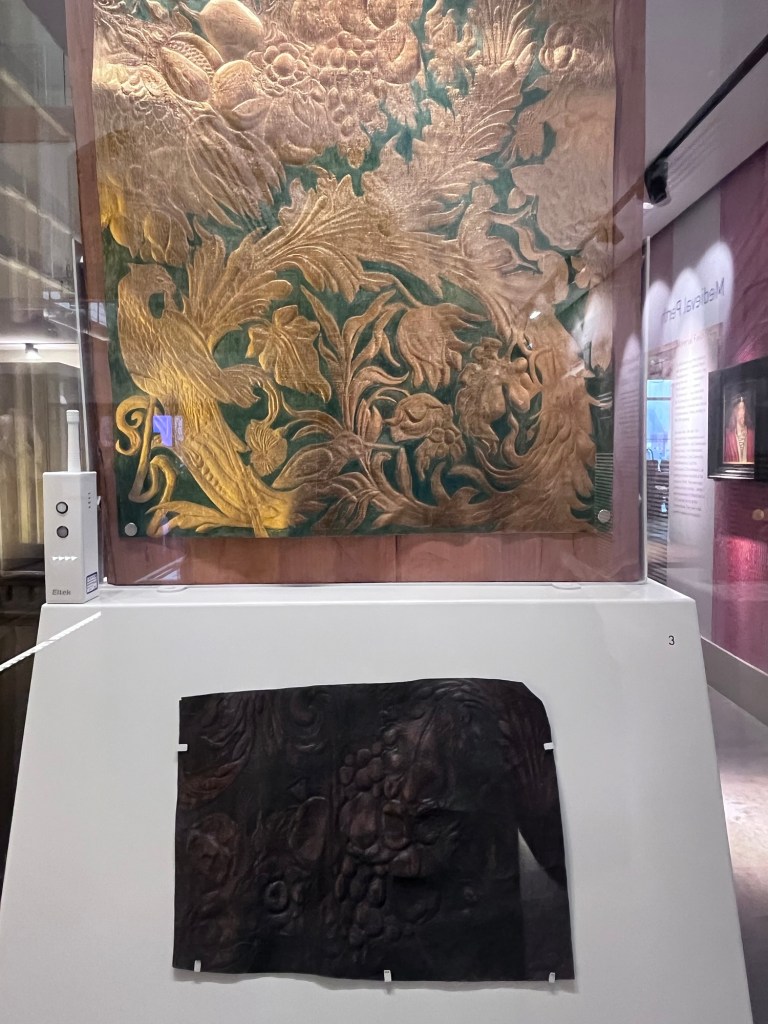
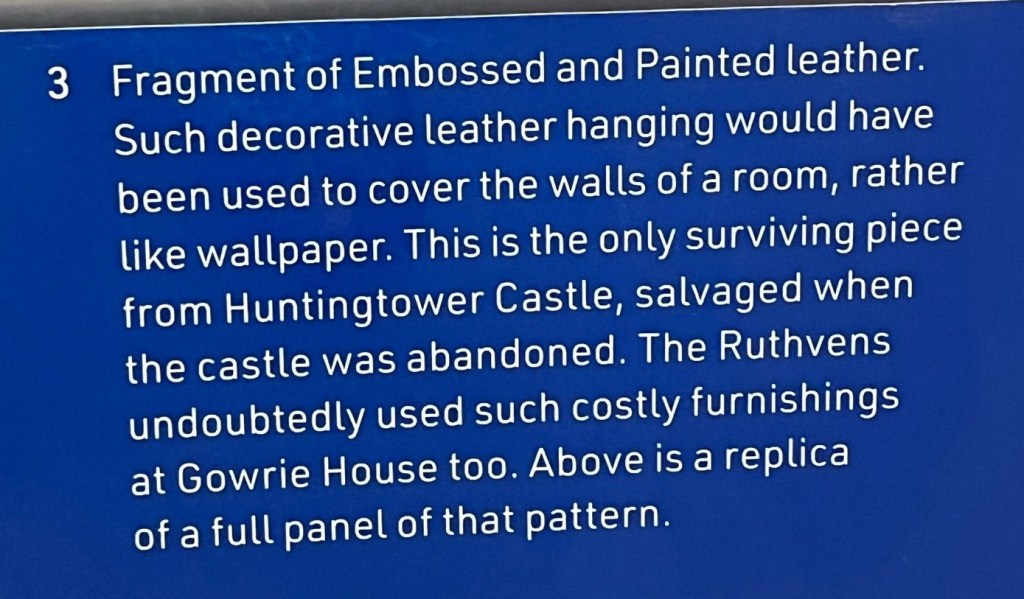
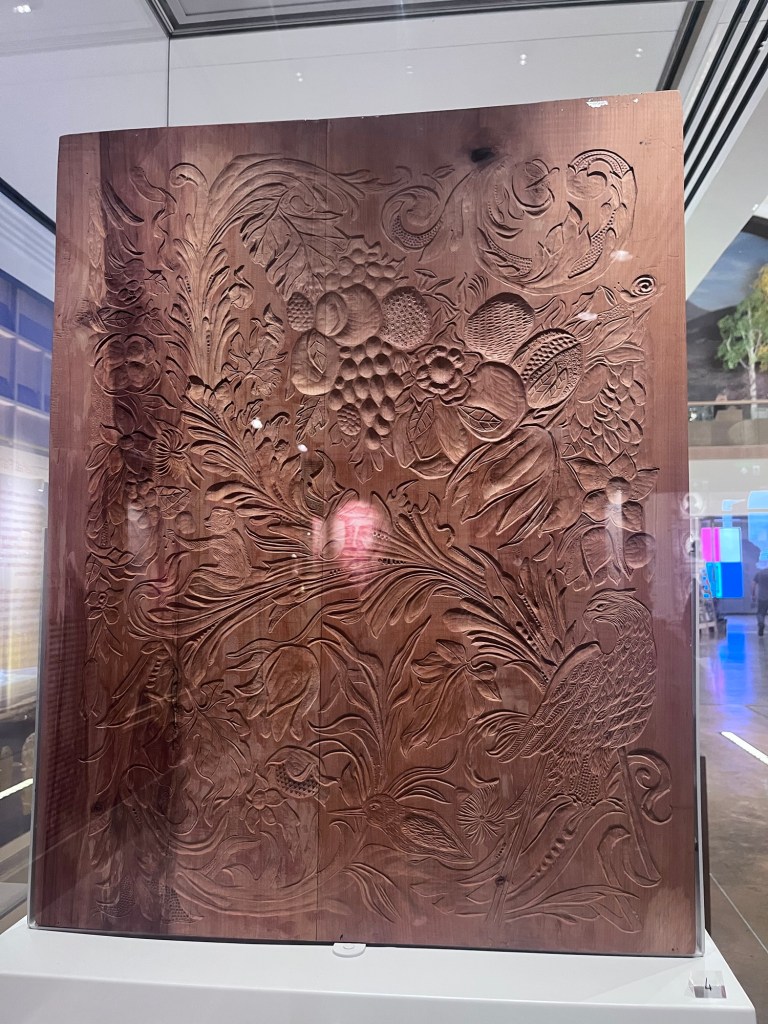
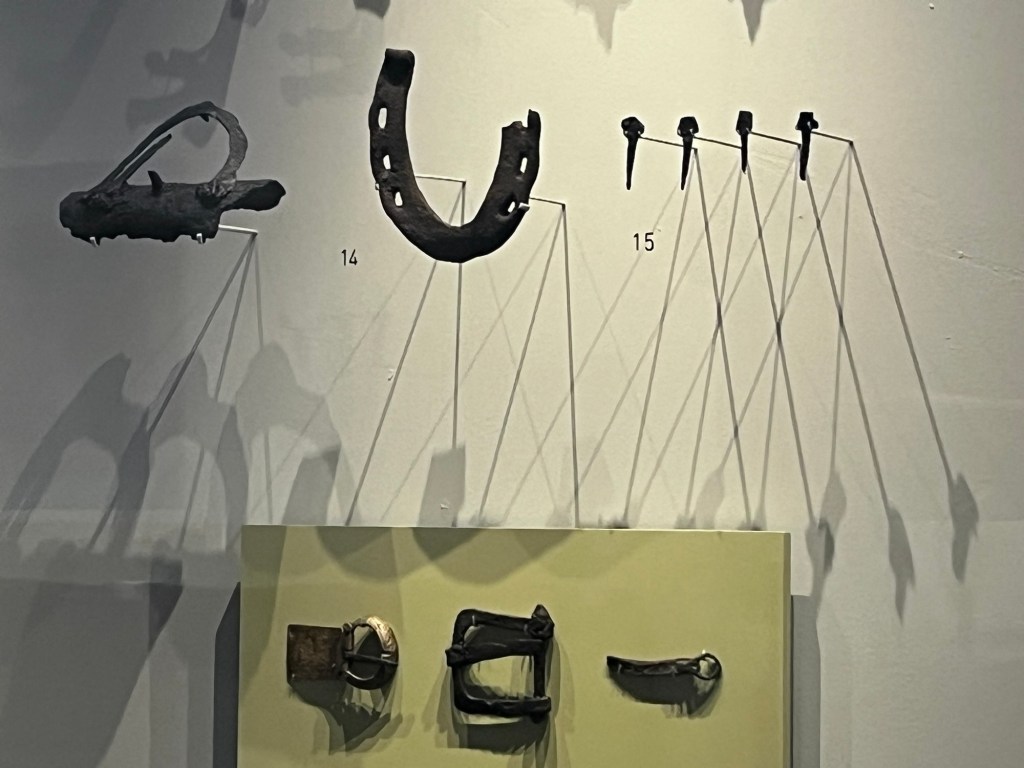
I got really distracted by the shadows in the display cases at one point. They intrigued me to learn more, lean into what the artefacts were. But also the visual complexity of the shadows of things. It’s a useful metaphor in a curated historical and contemporary cultural space.
Theses spaces are not neutral.
Histories are curated.
Museums are places of shadow and story.
Some scientific fact, some forensic truth.
Dominating culture that flatten nuance.
Some storytelling, some myth.
Often unknown, educated guesses.
They are anthologies without access to all knowledge but work within contexts of what they do have and curatorial expertise of the team that develops such spaces.
I enjoyed experiencing the Perth Museum throughly before going out to Scone Palace.
Here follows a visual story.
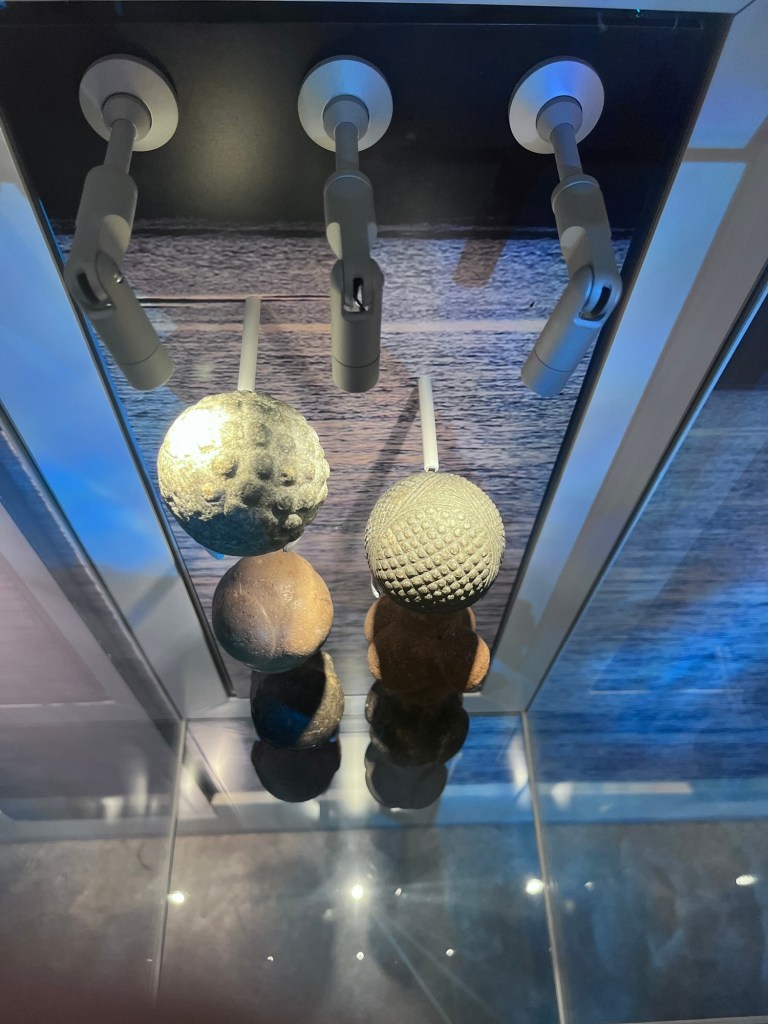
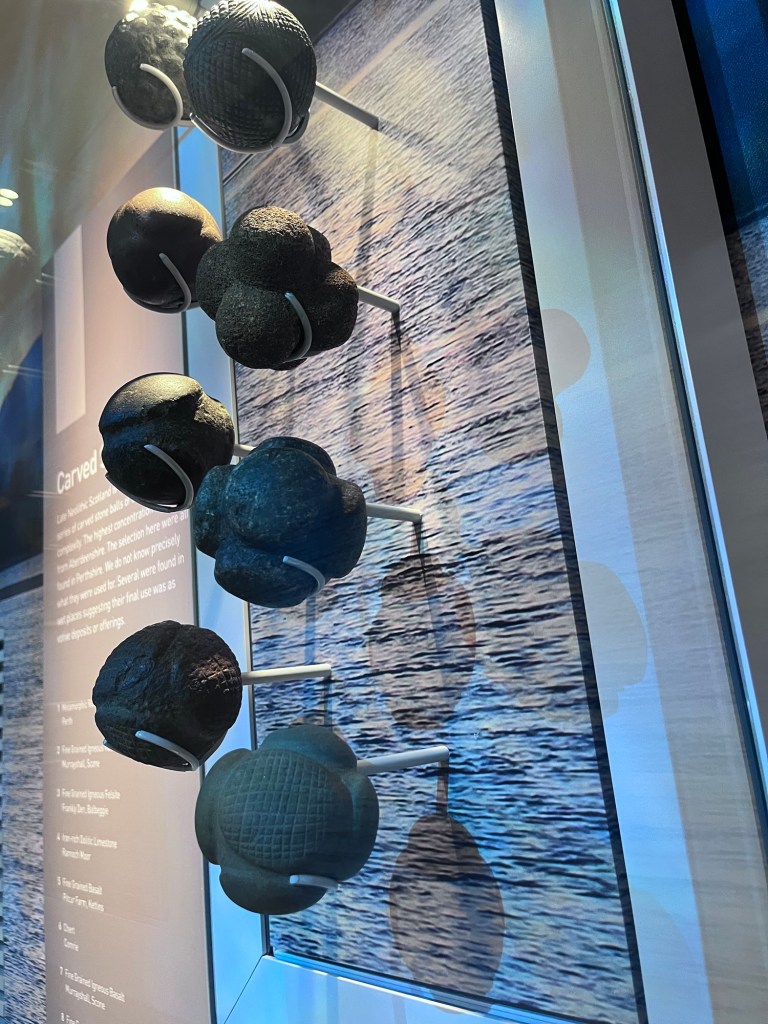
These 8 Neolithic Carved Stone Balls draw a variety of curious guesses as to what they were used for but no one knows what they actually are. There is a QR code on the display box that brings you to explore them further with information on where they were found, a 3D model of each carved ball, an invitation to guess uses and responses to same.
These 4th century BCE stone carved balls are fascinating. I appreciated the genuine “we have no idea what these were used for”.
Aesthetically they are beautiful. The most detailed one reminds me of French metal boules patterns. I wonder are they tools? In the same way we use sand paper perhaps the variations of refining a material to smooth it working down to finer details like in felt making or when working with animal pelts.
Could they be learning tools for understanding different stone. Shaping, carving, fine stone work to show what can be achieved!
My final theory is they are remedial medical devises to help with lost sensitivity of damaged limbs, offering multiple textures to increase or reintroduce nerve endings responses while healing. It’s a stretch I know. But I did use multi-textured items (buttons, Lego, sand) to restore and manage chronic regional pain with a severed bone in my wrist as part of my own healing journey circa 21 century.
Half way through the museum I started looking at the shadows of objects and the interplay. The dramatic lighting of certain objects pulled me in to find out more.
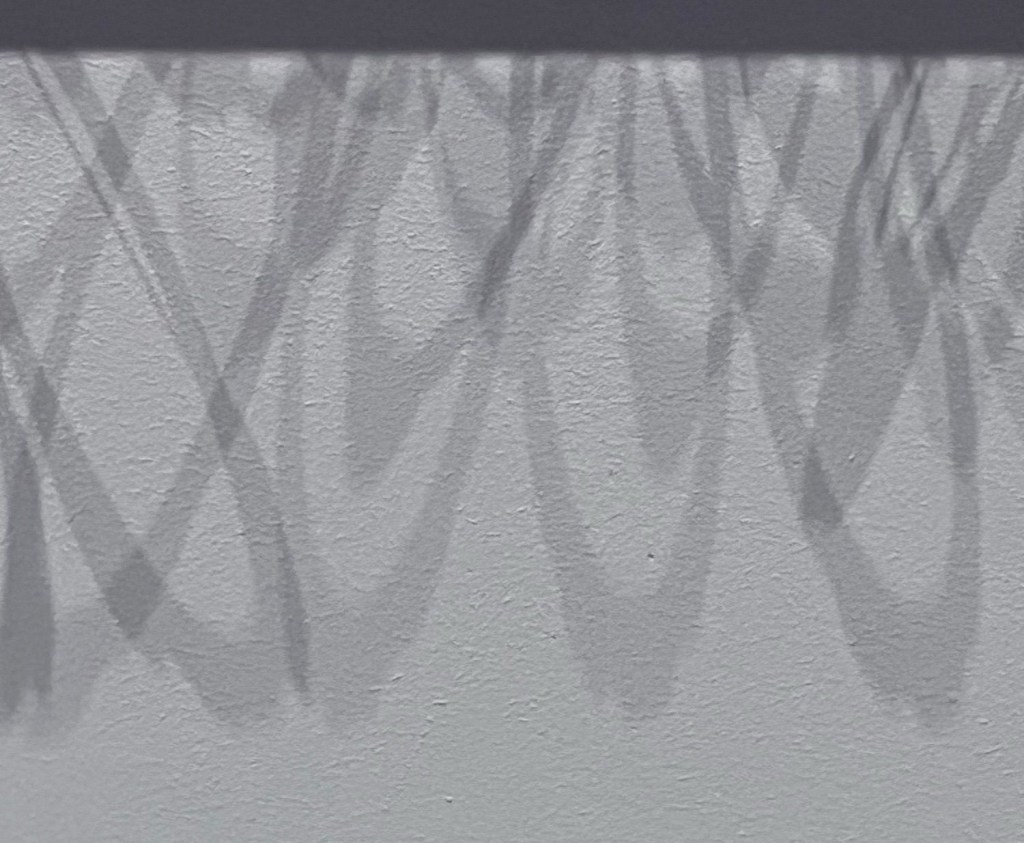
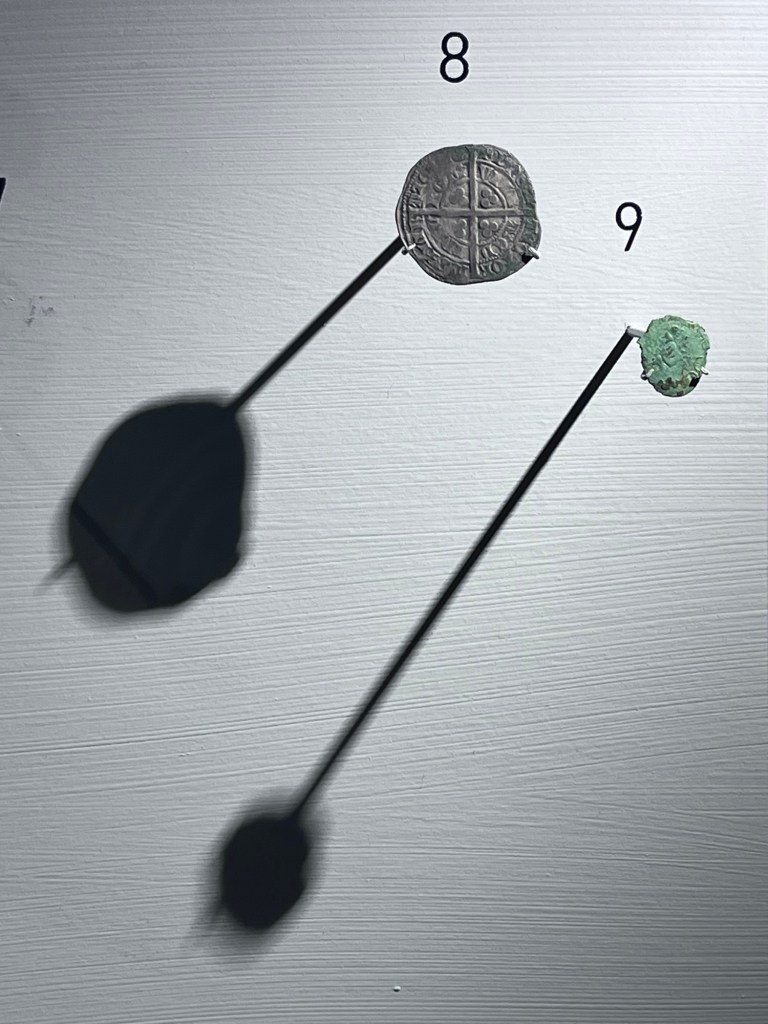
This display of rings below made the circular patterns in the image above. But what made me curious here was the coin folded in two and the explainer of “the custom to fold a coin in half a vow before a pilgrimage”.
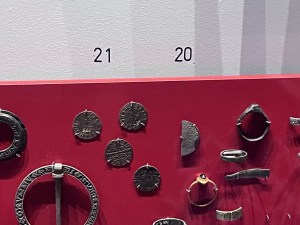
1390-1410. It was a common practice to fold a coin in half as a vow before going on pilgrimage. Found in Kinnesswood.
The folded coin was a new piece of information to me it pulled a memory of the wooden cross outside the tiny chapel in Gougane Barra, County Cork. It has a ritualised money offering where coins are stuck more than half way into the rudimentary wooden cross as an intention or ask. The cross when you meet it has a heavy burdened energy, I sensed it was more a fetishised pagan ritual and spiritual practice now consumed by contemporary christian beliefs. The small chapel that the cross is beside sits in a mountain landscape and is a recognised thin place.
Where did the idea of folding a coin in half as come from? What’s the origin of the superstition? or was it an act of intent that carried a placebo.
There was a sensitivity warning that part of the display did have human remains. This display was at the end of a specific narrow corridor like space.
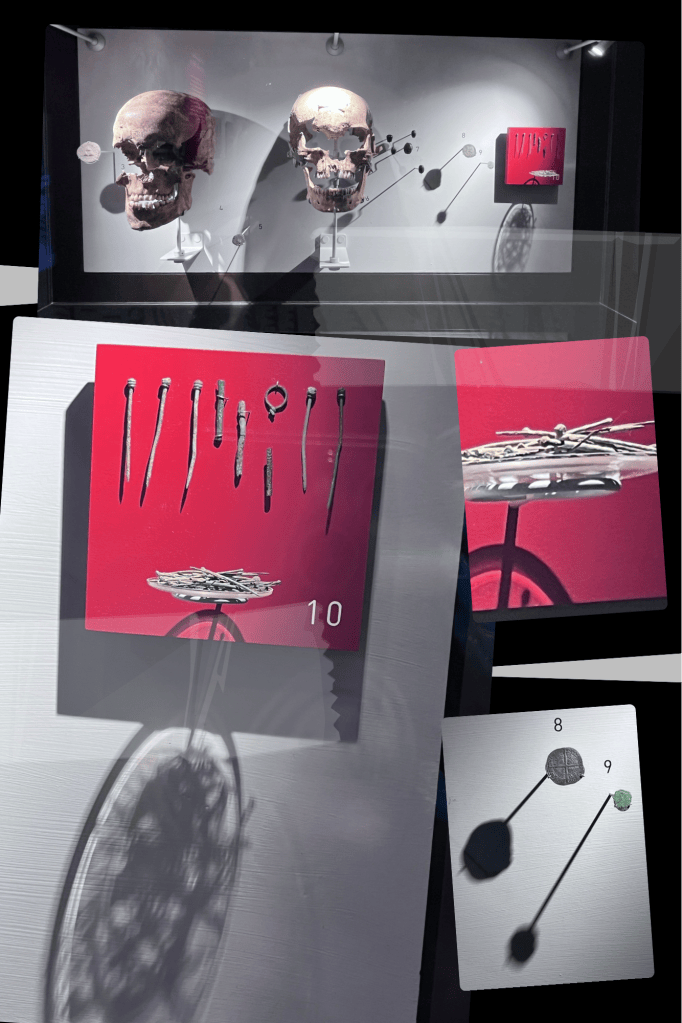
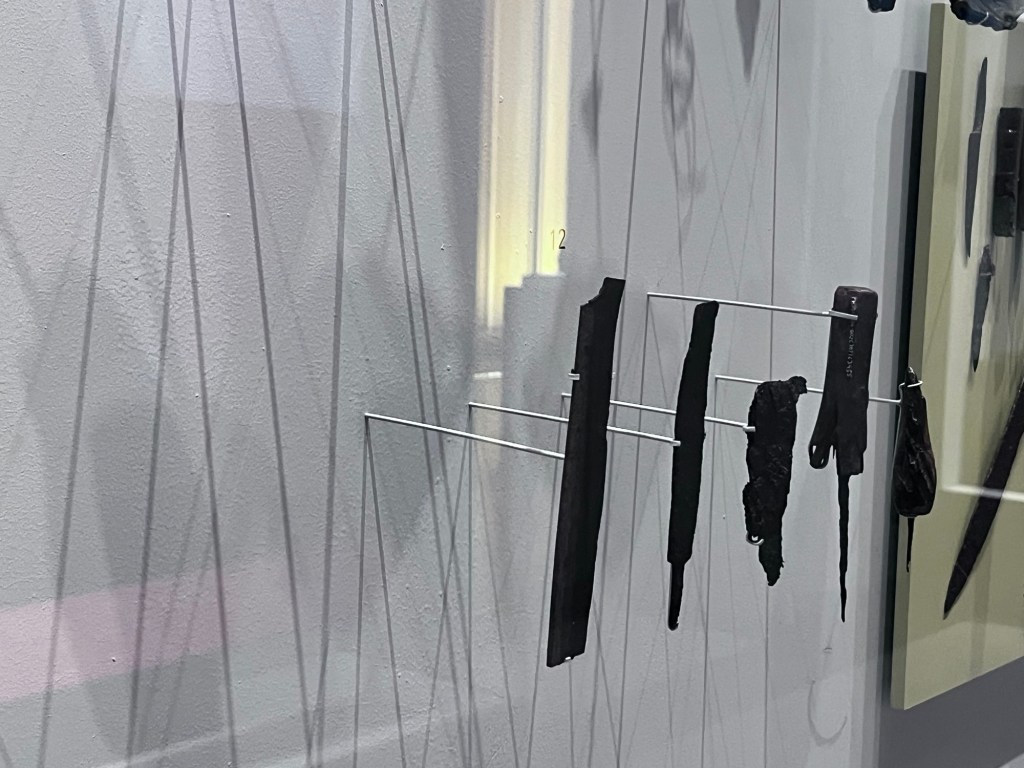
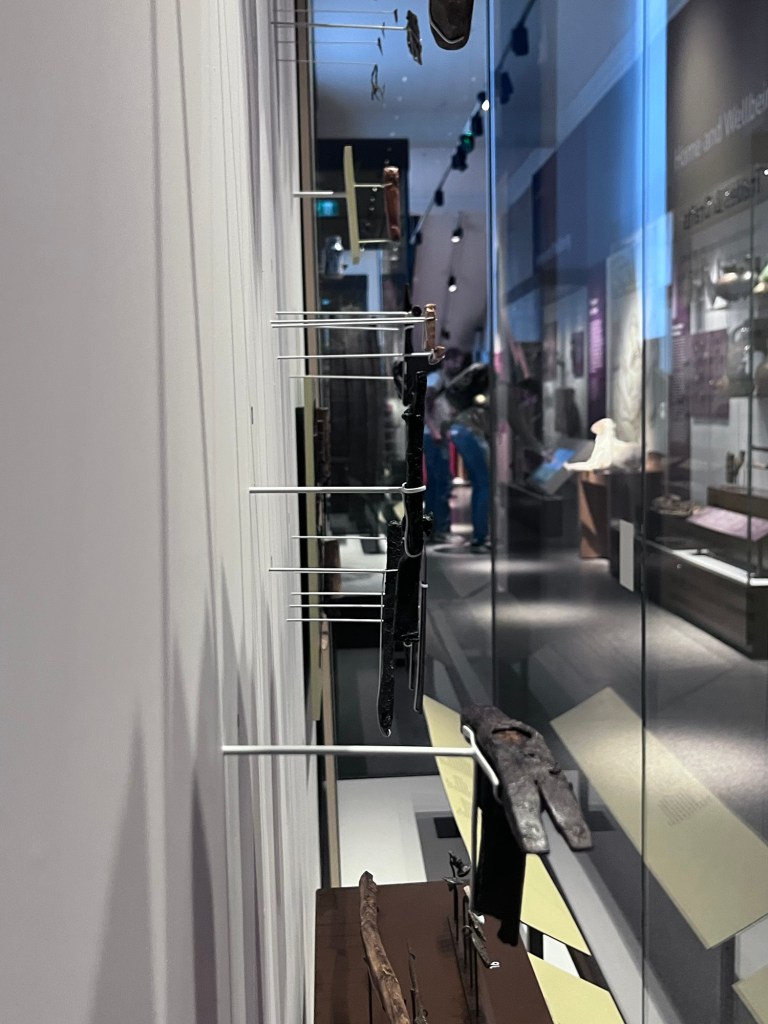
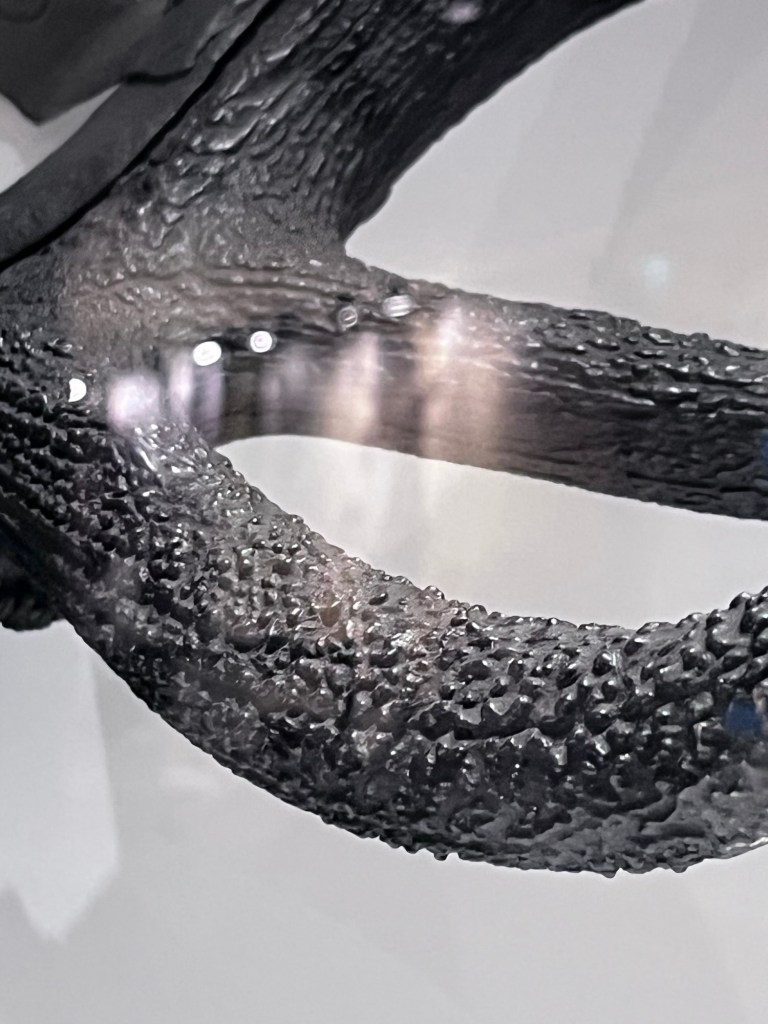
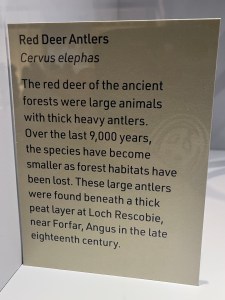
I returned to the first artefacts of the museum to look again. Staying longer there than expected. The texture of the Giant Elke and Red Deer Antler were intriguing. The shadows of the objects invited me to think about the changes in time and evolution and extinction.
Perhaps it was because I am sitting with shadows of old systems dying or the fact I’d had an intensive week. Or that a large piece of work has finished or I’m choosing to complete cycles of things I’ve worked on for years.
But within the walls of the Perth Museum in Scotland I noticed the shadows as much as the artefacts telling the history of place. This post represents a small part of the museum that I have responded to and thought about more deeply.
It too is a metaphor.
curious additional information
The Stone of Destiny, an ancient symbol of the Scottish kings, was taken by four university students in an audacious Christmas raid 75 years ago. This was more than a prank: they said they were in fact reclaiming a beloved treasure stolen by an English monarch more than six centuries before.
The 1950 heist to reclaim the ancient Stone of Destiny BBC Article, Greg McKevitt 2025
King Charles’ coronation: What is the Stone of Destiny and where did it come from? 2023 BBC article
On coin bending and ritual:
‘Alice injured her foot and the disability became chronic with suppuration. Her father vowed to visit Canteloupe’s shrine, and invoking his name and saying prayers he bent a penny over her head, after which they went to Hereford.’
William Tyler, numismatist wrote on his blog about bent silver pennies in 2021
Tyler mentions Divina Moneta, which has a chapter written by Richard Kelleher specifically about
Pilgrims, pennies and the ploughzone, Folded coins in medieval Britain.
It also has a chapter on tree coin rituals.
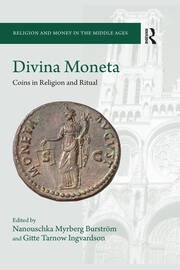
interdisciplinary discussions are organised around three themes: coin deposit and ritual practice, the coin as economic object and divine mediator, and the value and meaning of coin offering.
I also found this reference on a UK metal detecting site with a reference to the PAS website but I have no idea what that is
Tim, 2011
This is taken from PAS website;-
The topic of folded coins is part of ongoing research by a curator in the department of Coins and Medals at the British Museum. Two explanations for folding coins have been found so far:
1) A pilgrim would fold a coin before setting out on a pilgrimage, upon arrival they would offer that coin at the shrine (Hinton).
2) A coin would be folded and a prayer said/saint invoked over the body of a sick/dying/dead person (Gilchrist & Sloane) – a few folded coins have been found in graves.
And from another source;-
An old English superstition decreed that a bent coin should always be kept in a pocket or purse to ensure that it’s owner would always have a good amount of money.
There was another purpose too. In medieval times, until at least the late 16th century, it was customary for a man to bend a copper coin and give it to his sweetheart as a token of his love and intention of marriage. They were never spent and were always carried by the woman as a demonstration of her loyalty and as a constant reminder to her each time she opened her purse. There was a difference between the good luck symbols and those given as love tokens however. Those bent to bring financial luck were usually just simply bent through the centre, whereas those made for love were usually bowed or even cup shaped.
Another saying = ‘Bowed Money for Love, Bent Coins for Luck’
No I never thought to AI this. I wanted to write about it in an ordinary way and think about it organically.
Hope you enjoyed the read.
 Roisin Markham
Leave a comment