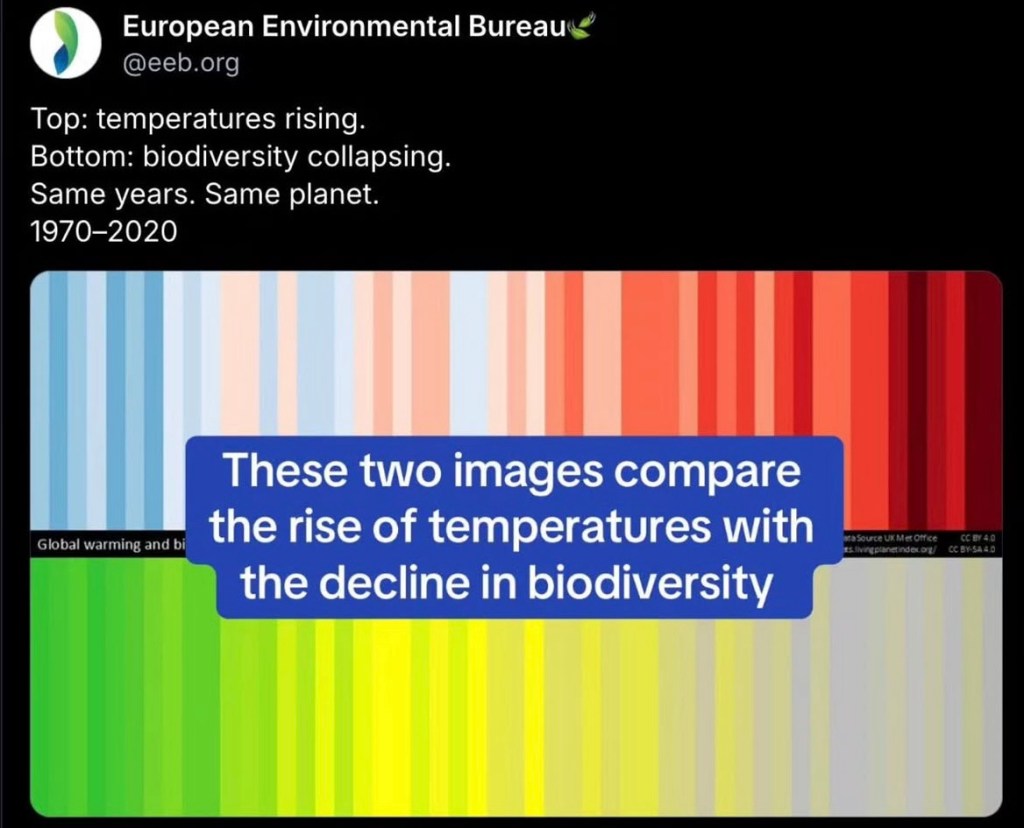
From January to May, I have been connected into workshop facilitation and report writing with policy makers across our shared Island, the spaces have included policy makers and advisors – academics, senior civil servants, ministerial advisors, some civic society, and business networks.
I am writing this in part to document the work in one place and to share the intelligence across my network, in particular to those of you who follow my work and hire me through BDT Consultancy.
1. Learning and getting up to speed in general
WEALL, the Well-being Economy Alliance global group have developed an excellent Wellbeing Economy policy design course that takes you from 101 to design your own focused learning across different modules. I recommend it even if you never design policy, it’s an opportunity to be informed. Particularly of importance if you are attending to a just transition of our society and economy, societal health and resilience or closing the gap between policy, strategy and implementation. That includes you if you run a business and are connected to networks of any sort.
You get it, yes, I think everyone should do this course.
It has an excellent module on the Welsh Future Ancestor Act 2015 , in my work with future ancestors and doughnut economics I talk about this. You can see my most recent slides here.
2. Learning in round tables
Building on the success of the Rethinking Growth Conference in June 2024 the Wellbeing Economy Alliance Ireland Hub focused on creating a Wellbeing Economy Policy Design event on the shared Island. It was held in Belfast in January 2026.
Tangentially I was aware of all the work going on, as part of WEALL Ireland Hub core group. As the preparation work ramped up I became part of the facilitation group delivering the third horizon in the Horizon 3 methodology. A north south, shared Island approach with Queens, the School of International Futures (SOIF) and WEALL Global support, the EU Merge Project was also involved. Caroline Whyte from FEASTA and the WEAL Ireland Hub wrote the out put of that session.
The report from the session and contextual background is here, was written by Caroline Whyte read it on the FEASTA website.
I blogged about it here.
Disappointingly the report does not mention I got the whole room to hum to activate a Time Machine in which we traveled to the future where humans had done everything possible to bring us back within planetary boundaries and no one fell short of life’s essentials. When we returned to that room in Belfast I got everyone to draw and share the future they had all seen shaping a new and collective social imaginary. An important difference in how we activate imagination in policy spaces. I was told getting them to draw would not work. I was firm, I said trust the process. I have my relational low barrier ways. And so there was a gallery of potential and relational work.
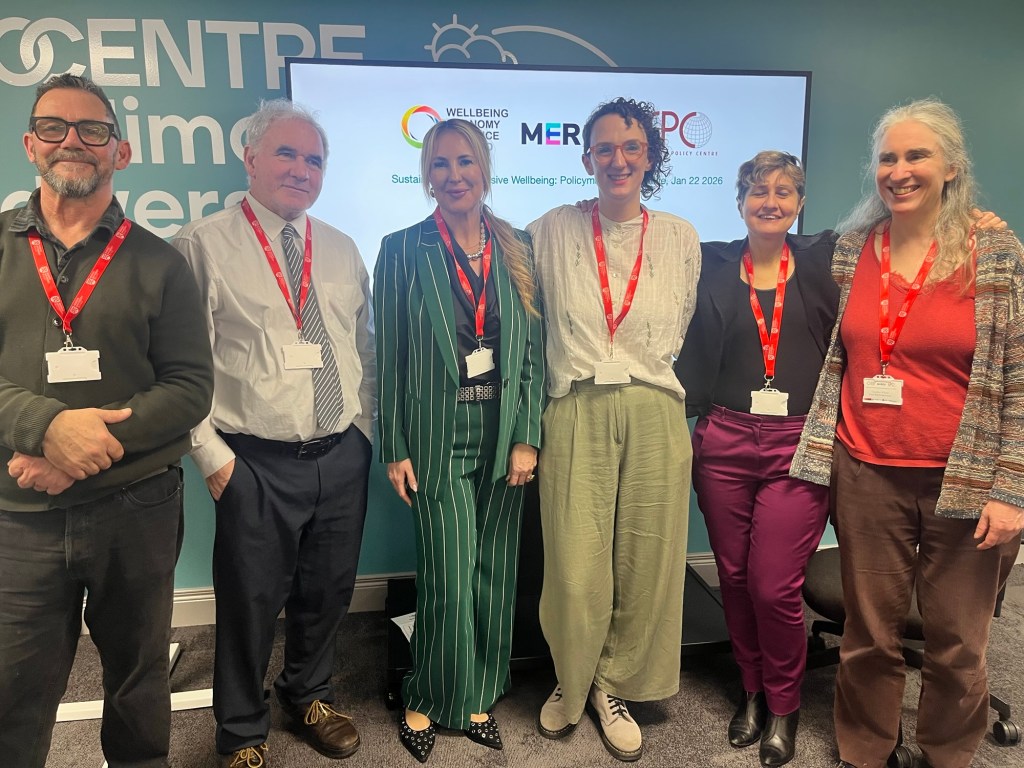
L to R Davie Philips, Peter Dornan, Sophie Howe, Lisa Hough-Stewart, Valentina Caimi, Caroline Whyte.
There was also a musician there on the day, Sinéad Gallagher she played an unusual windbox instrument and sang, it’s mythopoetic quality both a navigation and a listening post. An important contribution to the day.
I digress.
3. Broadening and deepening workshop
Following on from the round table in Belfast, UCD, SOIF, FEASTA and Coalition 2030 came together to bring the work deeper and broaden participation towards enterprise, civic society and senior civil servants.
Although not involved in the design, and delivery nor the invitation list. When asked to recommend some enterprise folks I added 2 or three people who have strong network of networks, I was glad to see them there. I was invited to write the report and attended with that job in mind.
The over all design of the event was a take on a world cafe that diluted the strength of that particular methodology therefore working to an extent but not fully realising the potential of such an expensive room. (Do you every consider the cost of a room of people in a workshop, if we added up everyone’s hourly rate, what it costs them to be in the room, travel, childcare etc often think it would be powerful to make this hidden cost of this kind of work more obvious).
As someone who’s worked as a futurist, independent thought leader and foresight consultant I found the event frustrating. I was listening only. There was a lot of how do we do this, could we create a new vision. I’d to bite my tongue on several occasions.
A broader networks of networks with cultural makers, designers and artists being present would have helped some of the conversation progress and pivoted some of the thinking. Along with stronger diversity and young people’s representation. Those critiques I have shared and hold as a strong framing in my participatory work – event and workshop design. The feedback apparently I over egged it but it was important to name it.
For my part I documented the workshop, wrote the report:
Governing For The Future: Institutions And Practices
Workshop ii Report, this link takes you to the FEASTA website.
I also probably did not centre, the poem read by as gheailge by a young man, nor the two female musicians playing during lunch, nor the solo young man a student at the table.
It was important for me to document the workshop and write a report as I would in my own business practice. It meant I could bridge into my real aim to write a 3-5 page policy brief.
A practical and useful artefact that had legs.
4. Actions and direction of travel
When I was asked to write the workshop output I made it clear I wanted to write an actionable document – a brief. I held the pen on this document, wrote the first draft and then managed 141 comments with 8 people to bring it alignment for publishing.
It’s already getting good feedback out in the wild.
There was already consensus on the brief as an output before I began. I’m not sure if it was Caroline Whyte, Donncha Kavanagh or Dermot O’Doherty that spoke about a politician being able to see themselves in the brief and adopting it. Putting it under their arm into the next election cycle.
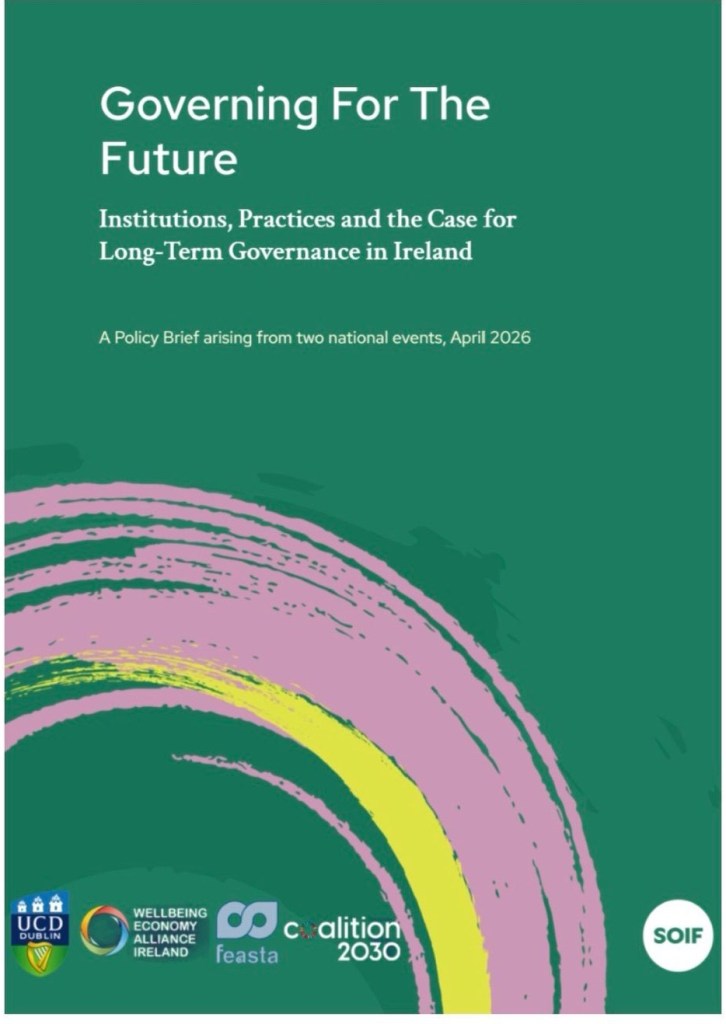
You can read the brief here, Governing for the Future Policy Brief it sits on the SOIF site as they funded the work.
5. What next?
There is now a WEALL IRELAND Hub group that SOIF is driving it forward, UCD and Queens are linked to the work as are FEASTA. With a growing number of people interested in the work.
WEALL & FEASTA are my links here so I am respecting that line.
This work needs to be participatory and democratic, broader then where it started and more inclusive. If I have any say in it I will demand young voices have to be included. I will ask for broader participation. After all if everyone looks or sounds like us we’re are not doing it right, right?
In June I’ll be supporting Caroline write an IEN Pilar paper on the wellbeing framework and future generations.
Let me know your thoughts and if you have any questions, just ask.
For me the broader question is How do we create a vision for Ireland… this is a new social imaginary of this rock we live on.
I am trying to find a way to apply for SEAI’s Fellowship as Topic one is exactly on point, ripe and juicy as a next step. However as a non-academic the path is a not clear route. I am an independent researcher, strategic designer, consultant and cultural thinker who is innovative given half the chance…
I have some mad ideas on how to do it and at scale. The futures foresight has to move away from business as usual. It defo needs more punk!
 Roisin Markham
Leave a comment