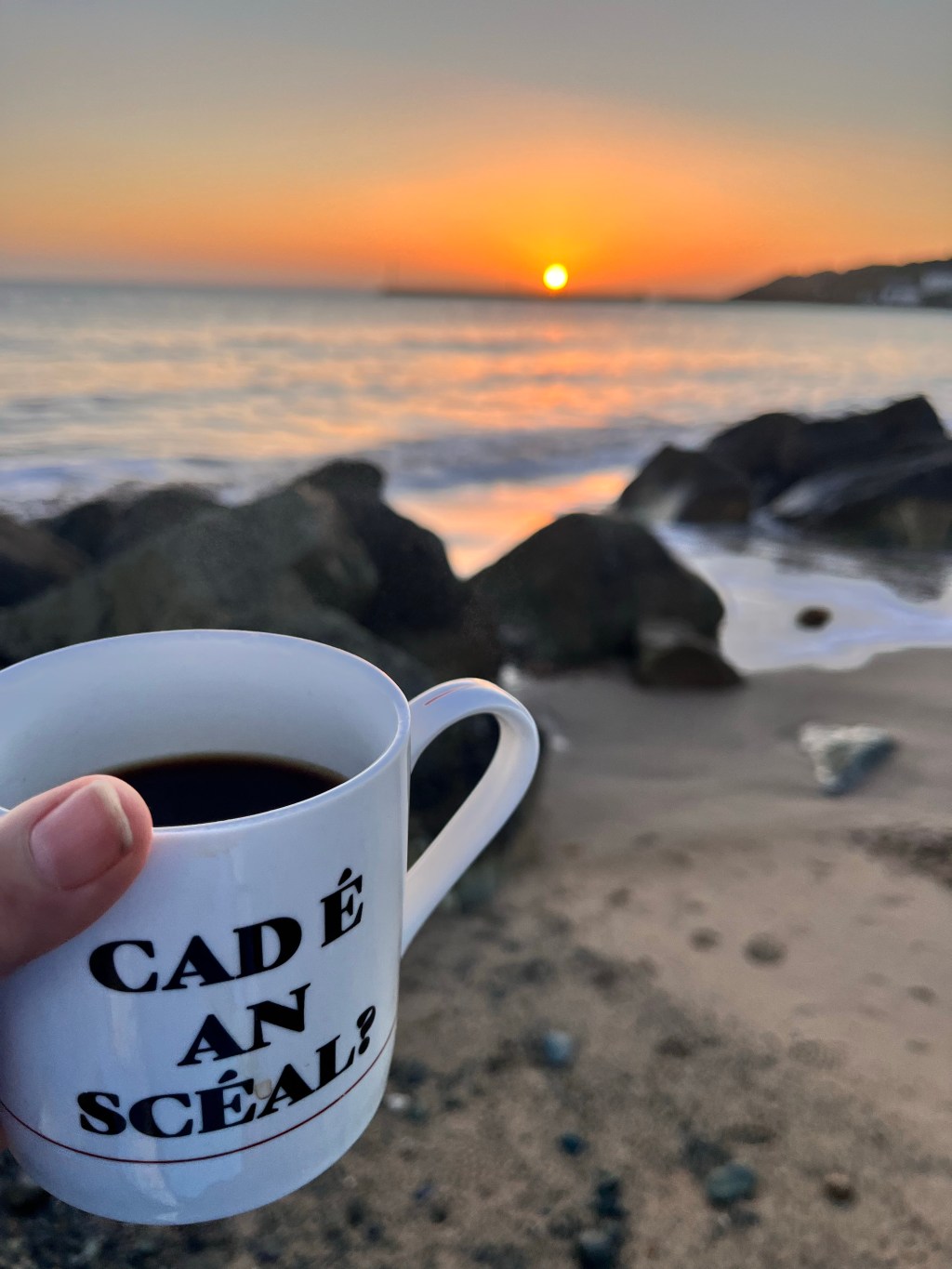
How’s it? a colloquial term round these parts meaning – Cád é an scéal? what’s the story? How are you? what’s happening!

Welcome! These are weekly studio notes written by me, not using AI, they are in part a record of self directed and client work, musings, pattern seeking, life affirming notes on this week.
It’s been interesting to try keep them only to client work. They are more blended now as you will see my self directed work informs my client work. It would be amazing to have self directed work resourced.
This week some serious crossover of ideas becomes more visible.
Im taking a slight risk publishing these today 1. I’ve not given them time to settle, distil or edit 2. I’m pulling in the publishing day as I want a digital detox day Sunday where my phone will not be charged and I won’t have it with me.
It’s all part of the thing we’re are doing, this exchange… read on.
Reflection
These images in my head are related*

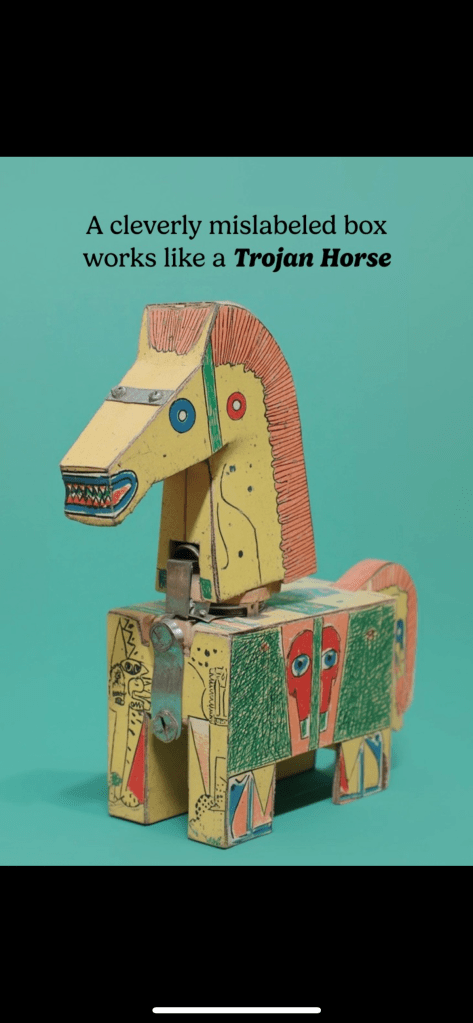
Perhaps it’s the quality of how they were made or the metaphor of both. Trojan Horses have been present for a few months in my imagination. Through a visual conversation with Orlagh O’Brien last week they have come to the fore again. It’s a slightly uneasy metaphor of war and deception that I’ve been unpacking. This clever idea of a “mislabeled box is a trojan horse” fits more easily within my value system, I say more later.
The cattle car sculpture is a bit more transparent, it gets me thinking about the impact of cars and livestock farming on our GHG emissions. I’ve been reading the ERSI research on attitudes and variations of options across farmers & nonfarmers, urban and rural residents – turns out there is no divide but there are some workable insights. I am aiming to do an analysis of it and other research I’ve been saving to create
- principles
- guardrails
- a campaign
for climate communication that moves the dial, that actually creates impact. How will we know? I’m aiming on creating a baseline and a/b test over a period of time. That’s the theory, as a visual communicator and strategist that seems logical… right? I’m sure some government departments is work on this but I’ve not seen anything. I’ve a pile of linked research that done through a systems lens will interconnect wicked problems. But I want to create space for something surprising, even to me!
That p/t job I applied for might give me an opportunity to do some of that. They had made positive noises that they wanted to hire me but changes to the scope may change the work and offer and I’m none the wiser at the end of this week the direct all that is going in.
What I know is as an island of story tellers we are failing so badly on telling the story of change that we need to actually have the biggest impact on reducing our green house gas emissions. What ever I come up with has to be impactful. We need to move the dial. It’s not moving significantly yet. So the campaign needs to address bigger more impactful changes for scale. I always have this tensions of pushing actions to the individual vs. enterprise/municipality.
Part of the framing for this is the embedded economy
I’ve only just begun this research, it’s currently in a white board of sorts, but I’ve not coherently mapped it yet. I’m interested in inviting others to dance, think and share that space but it’s not ready for a plug and play yet. But do share if you are compelled to – your curiosity, things you’d put in the analysis, where this is showing up in your work, funding or resources.
One thing all of the research points to is that above all else eating less meat is critical. Our agriculture and food policies in Ireland are not in line with our climate adaptation or mitigation statutory commitments. My concern is they never will be. My mislabelled box project needs to attend to policy makers, lobbyists, industry and private concerns and the business as usual fear mongers. But remembering to go where the energy is and work with who is ready to do the work…
Can we use the diffusion model of tech innovation for climate change communication?

In my work Q4 2024 on regenerative agriculture I argued we could. I used it as a model for moving farmers from curiosity to first action, next action. Suggesting that the first action was attending how to training and the next action was a pilot plot on the land. Subsequent steps and funnels moved feedback, knowledge and finance mechanisms towards regenerative farming practices across the farm.
So this week writing, researching, editing – sense making I began to see how blending a systems ecological view might offer different pathways for impact. An imperfect blender, that’s the container.
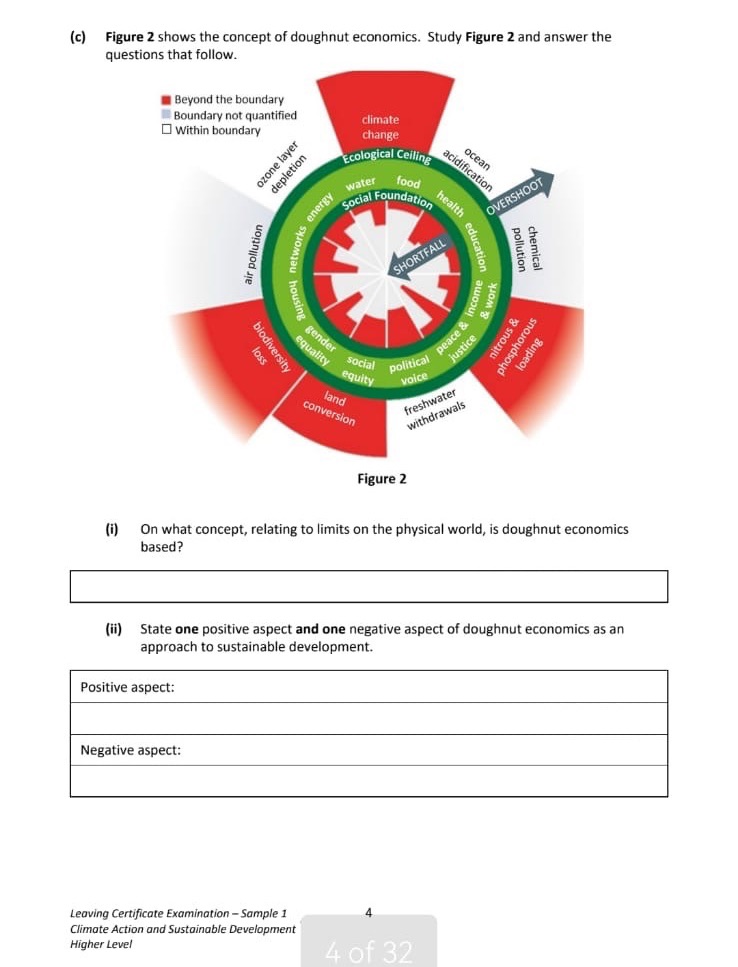
As it bucketed rain on Friday I reminisced to the week’s fabulous Oxfam Ireland Cork event. I realised I do an introduction to doughnut economics once or sometimes twice a month. Last week I was very concious of some extra time and extending the Step into the Doughnut workshop to address the 7 ways to think like a 21st century economist, where to find more information, how to be in action with doughnut economics. The unpacking has become this really empowering part of the workshop, people share insights I build and connect in holistic thinking. Co-facilitators tell me they learn lots but don’t explicitly tell me what!
It’s an in the moment response to the participants, the experiential practice of economic literacy, the space between people and all the doughnut offers us as a framework, a compass for change.
There is some great news from the department of education in Ireland, they have updated the senior school cycle Leaving Cert in the new Climate Action and Sustainability Syllabus includes Doughnut Economics. That’s a significant inclusion we need to get it introduced into the economic syllabus also.
I spent much of this week researching and writing about renewable energy, community ownership, Samsø and the Energy Academy lessons for Lough Neagh, Northern Ireland, the shared island perspective and the jurisdiction known as Ireland. There is also a point where editing kicks in. Minor tweaks to be made and then I will be delivering it to DTNI next week.
One of the things that was challenging me was this drawing, explaining the trajectory of projects on Samsø. Søren Hermansen had drawn it, explained it so emphatically in the workshop with such depth that when I went to unpack it my brain just got stuck. Having trained originally as a graphic designer complex ideas translated into images is part of my skill set. That classic design education ever present.
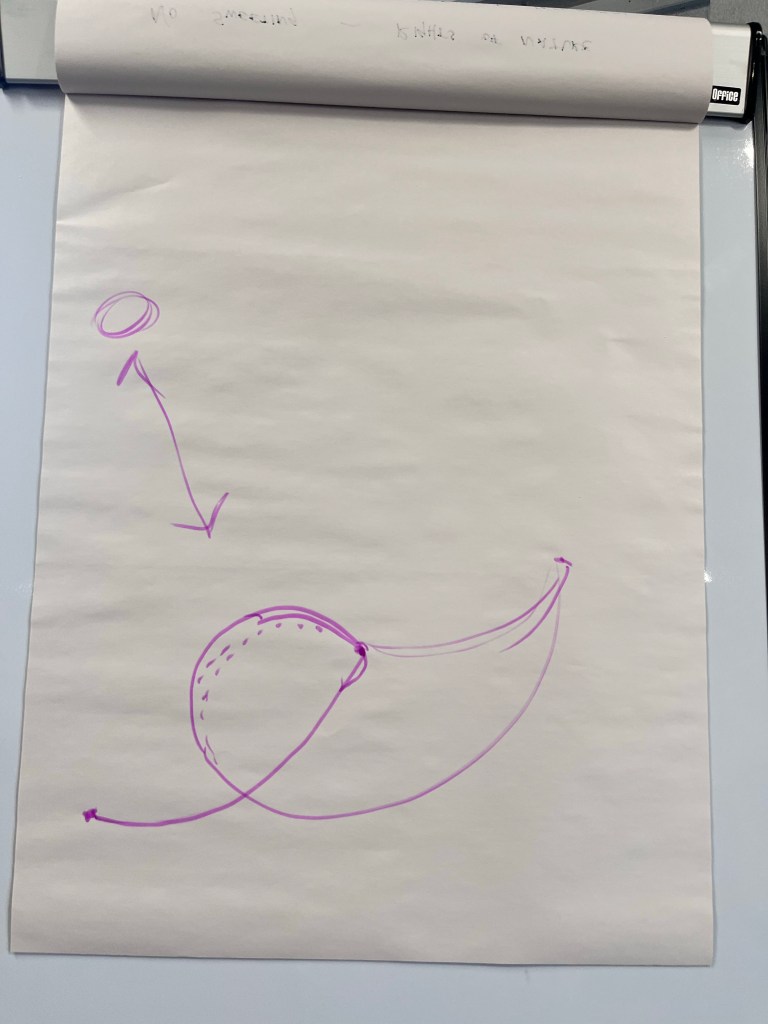
I’d been trying to create a graphic that represented the significance. It reminded me of all sorts of bell curves and S diagrams. But I could not find any graphics or theories that looked at the intersection of the trajectory of projects with participatory governance. So last week as I redrew it:

I tried various things. I’d emailed Soren and he’d sent me back the Energy Academy’s Team Performance model. It looks at the actions across creating, performance through to sustaining a team in continuous project development. With my large scale enterprise hat on it was an interesting intersection of programme management and delivery, even had shades of agile there. But it was more honest because it was a real lived cycle of what happens if you don’t care for the team or have governance, learning monitoring loops. The levelling off of the trajectory of growth in community led renewable energy projects is impacted directly by people, their sustained capacity for the work. That capacity building, resourcing and care is a massive gap across communities in Ireland right now. We see pockets of excellence in SEAI SECs but we need a coherent strategy to build capacity for communities that don’t have the resources required to assemble these types of groups.
So this is what I designed for the report
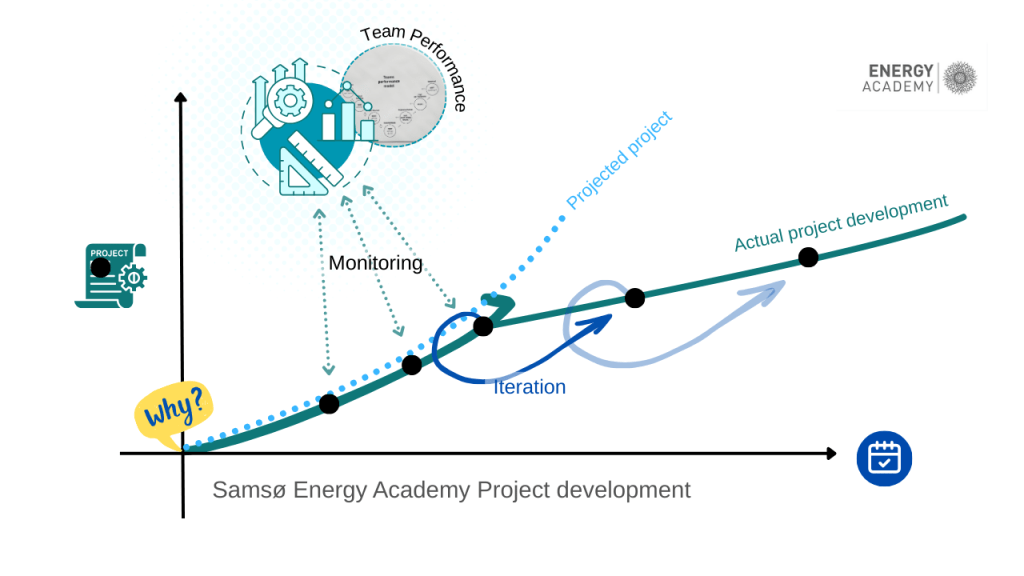
It’s still not 100% but I sense I’ve created a graphic attesting to the expression or map of what was being shared in the room. The whole point is that the participatory governance, sustaining people through the cycles of project development sees a step enthusiasm curve that levels off. The feedback loops just like in models of business management require care, learning, adjustments, integration before going again. The people care is critical, at the community level this could be a 20 – 50 year commitment. We have to attend to a structure, education and support system around communities if we are to create and diversify ownership within a just transition. Most planning is done in 2-5 year short windows of election cycles that has to be addressed.
There maybe a further tweak to the graphic, feedback from Samsø suggests monetary value is missing.
The other part of the report writing that surprised me was policy considerations because of my work in the energy sector and attending the NESC sectoral systems workshop on energy its given me different patterns to notice and connect.
The Lough Neagh specific complexity is insane and complex based on mixed ownership of the natural resources. Private and Crown ownership of what should be in the commons is eye opening. Our colonial past still present. Uncoupling of those ownership structures is part of the recommendations for the future of the Lough.
I’ve been thinking a lot about value. The deterministic approach for most of us is the currency we have in our pockets. Actually in my pockets you’ll find lichen, shells, hag stones, sea glass or seeds.
Through my circular economy work, report writing and presentation to Courtown Regeneration Group I’ve been sharing this slide

It ties into some of my explorations in economics and metrics (anything but GDP and the horrible reality that we measure success in Ireland on new cars and houses being sold).
What if the determinants of a good life, a wellbeing economy recognised returns on all 8 currencies? simply easily what might that mean?
When we combine this with the framework of doughnut economics it shows us our shortfall, can we translate that into the future frame? the goal of our economy? Can we get it to be the map of this moment but more powerfully help us prescribe our new social imaginary?
There are plenty of tools, frameworks and smart people around offering approaches but what does it look like here. In my place… who else wants to answer that?
I go back to metrics – how will I know a future worth living into?
What does that picture look like? as a designer strategist I’m asking does it look like a Likert scale or a smiley face scale?
Can we play with it?
As away to make sense of it can I create some interactive conversations and enquires that share out my enquiry and engage with others in a playful by regenerative way to explore this?
Challenging myself to really explore who might have done this already but for my context what it really means!
As so it will very strongly have my lens. I’m aware how I ask questions sets up a precondition of data capture, how do I avoid that? Or should I seek to fully embrace the version held within my rewilded 5th province?
A surprising thing is that I have been invited to join a Wexford County Council Economic Strategic Policy Committee as the PPN environmental representative as put forward by Wexford Environmental Network. This is how policy is shaped at a county level.
I attended a two hour session last week run by the Department of Housing, Local Government and Heritage specialised induction training for all members of Strategic Policy Committees (SPCs) within local authorities. Delivered in conjunction with the Association of Irish Local Government (AILG), The Department of Rural and Community Development (DRCD), Public Participation Networks Ireland (PPN) and the Institute of Public Administration (IPA).
As someone who is trying to understand local decision making, policy strategy and planning it was time well spent. Also interesting to see the Better Public Services 9 design principles and the double diamond shared in the session.
Insights
On other metrics of transition, it had been bothering me that my emissions when calculated showed a significant higher use of energy then typically in Ireland.

I finally combed through the energy and realised that I was tracking gallons not litres of kerosene which we still use to heat the house!

Now 2030 does not look so unattainable. This is the program I have been using for the last few years, I’ve identified 5 new goals to help me reduce emissions further.
A question for you
Do you track your emissions? What app do you use?
Resources
bylandandsea.ie is a new Irish resource – a guide, and a campaign for slow travel and alternatives to environmentally harmful air flights. I’ll be using it to figure out my up and coming UK trip.
*Joe Burns shared an amazing framing of what he loves and does about strategy on LinkedIn. I wanted to share it here not only because of the source of the Trojan Horse image at the top of these studio notes but because I really recognised myself in those images and how he spoke about it.
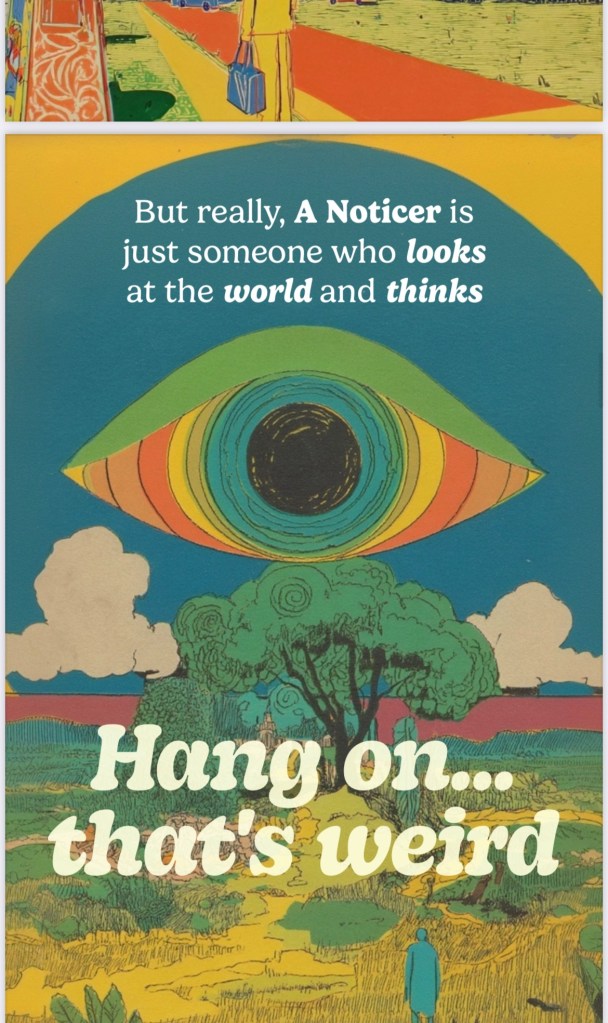
I am a noticer, I catch things other people miss, I put things together in different ways that people are like wow! As a strategist that’s what I do. I so enjoyed his flip-book. I’m sharing it here as you might enjoy it too. I could n’t embed it so you could view it in the blog (if you know how to do that let me know), you’ll have to download it to view or check it out via LinkedIn.
Building on the theme of mislabelled boxes and metaphor, I revisited the almanac of birds by Maria Popova, she has made a beautiful thing and shaped them into a book of cards — modeled on the 19th-century faux tomes known as “book safes,” used to conceal banned books or love letters — is the product of that passionate insistence.
(book safes and trojan horses, hmm)
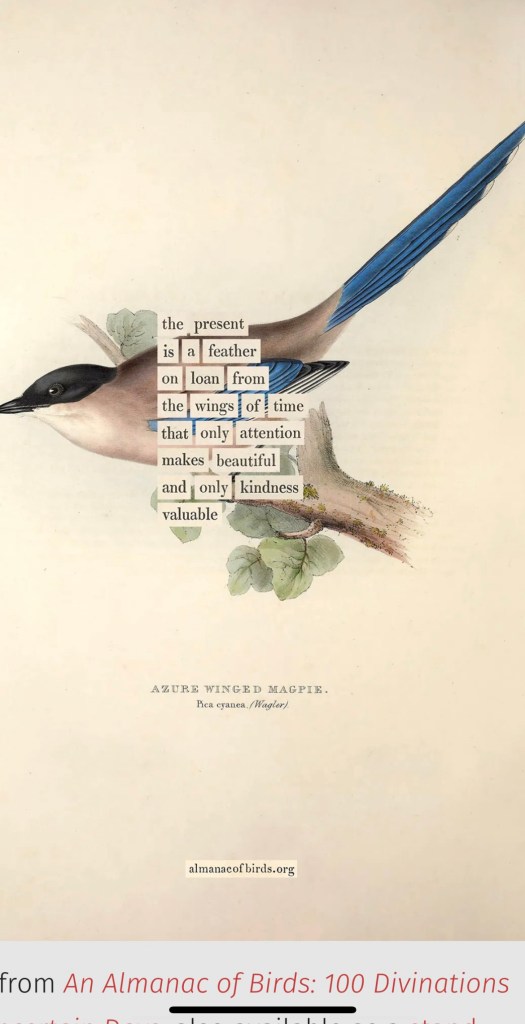
I originally came across this work in July 2024 falling in love with constructed from others words poetry pasted like a ransome note of love onto classic or ornithology illustrations.
Reminiscent of blackout poetry made famous on Twitter by A. Kleon (of steal like an artist, a framing I intensely dislike btw) but these seemed enchanted. Reconnecting with this work was a golden thread of such beauty it’s also given me insights into my own ecology of practices.
So much of the beauty, so much of what propels our pursuit of truth, stems from the invisible connections — between ideas, between disciplines, between the denizens of a particular time and a particular place, between the interior world of each pioneer and the mark they leave on the cave walls of culture, between faint figures who pass each other in the nocturne before the torchlight of a revolution lights the new day, with little more than a half-nod of kinship and a match to change hands.
an excerpt from her book Figuring.
These studio notes are also a resource, if you find them interesting or useful share them with someone else. Don’t hack them, nor pass them off as your own that will bring you bad karma. Let’s be regenerative, that’s always the invitation. I believe in the power of nurturing human nature let’s breathe more life into that. Be generous with this gift from my week, practice care and good politics in references. Like in the singing of Sean Nós you’d always reference the singer who you learnt it from and the legacy of the oral tradition through how it came to your ears or from your mouth.
A view to next week
Oh yeah next week, I am actually so excited to jump into it I’m going to work the bank holiday Monday. Seriously but also because I’ve a shortened week:
- deliver DTNI Lough Neagh report
- begin client co-design research
- education design for a co-design course based on research & baseline
- Earth Day Tuesday, I’ll be in Dublin
- designing an event
- responding to RFQ
- away for a 4 day retreat in one of my favourite counties in Ireland
- P30 to be paid, taxes to Irish government on salaries it includes all sorts of things.
I’ll be lining up a listening track for a 4 hour journey to Kerry I may share that in resources next week.
Have a great week!
 Roisin Markham
Leave a comment