What if we created a system that worked for us?
A few years ago, during the Tools for the Regenerative Renaissance course, I was introduced to DISCO.coop — a feminist co-op that I fell in love with immediately. Their manifesto was a joy: playful, cheeky, punk, and deeply serious figuring out how work, care, and mutual aid might actually be organised differently.
That was in 2020. I’ve been thinking about it ever since.
Because the system we have does n’t work for most of the women I know.
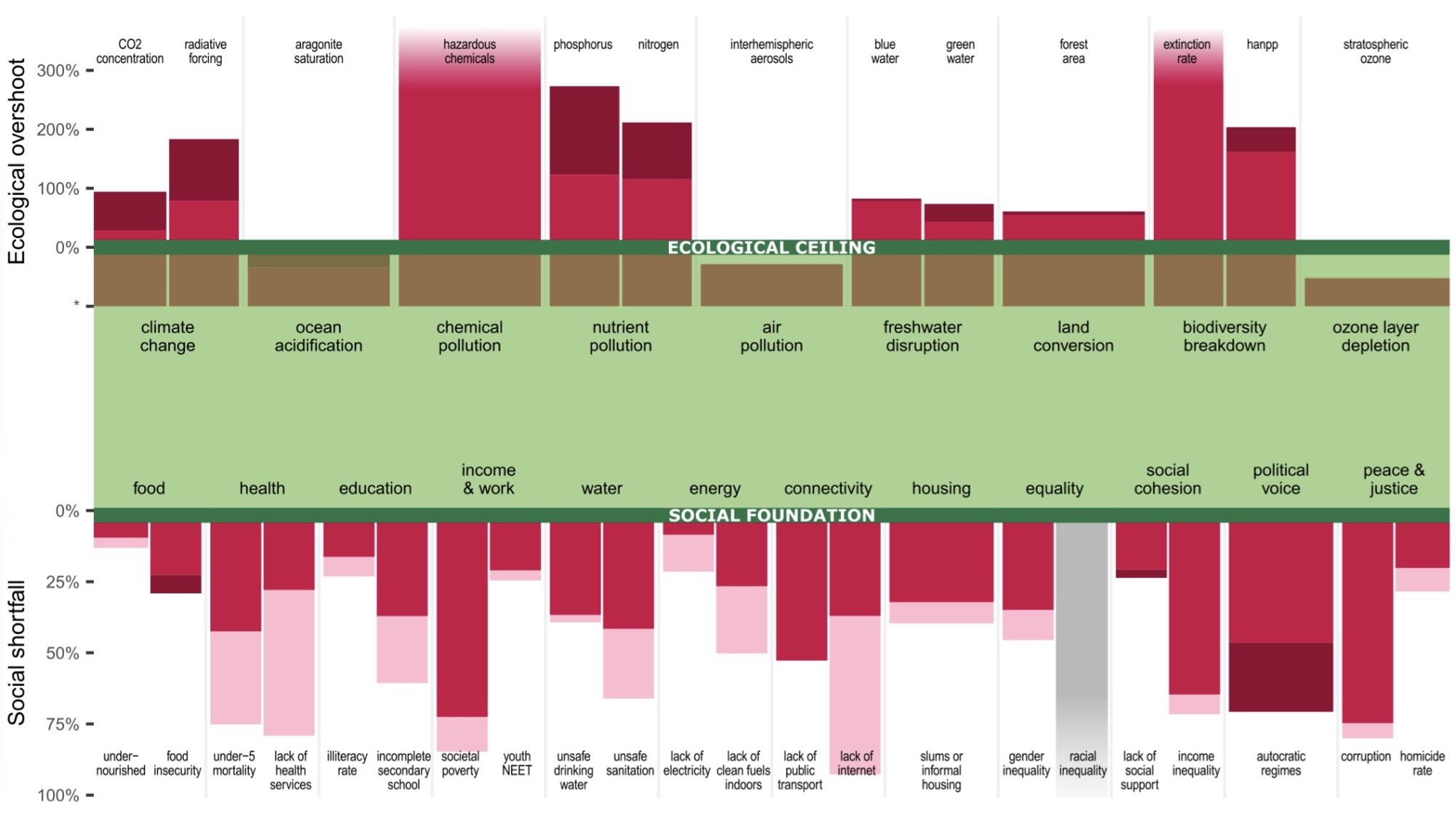
I worry about precariousness, the social shortfall. I see the systemic blockers. I see how business as usual cannot solve or even begin to navigate what is already here. We are living in the polycrisis. We need better democratic mechanisms. We need stronger social cohesion. We need forms of social and economic life that can hold care, relation, and repair at the centre and respect the web of life.
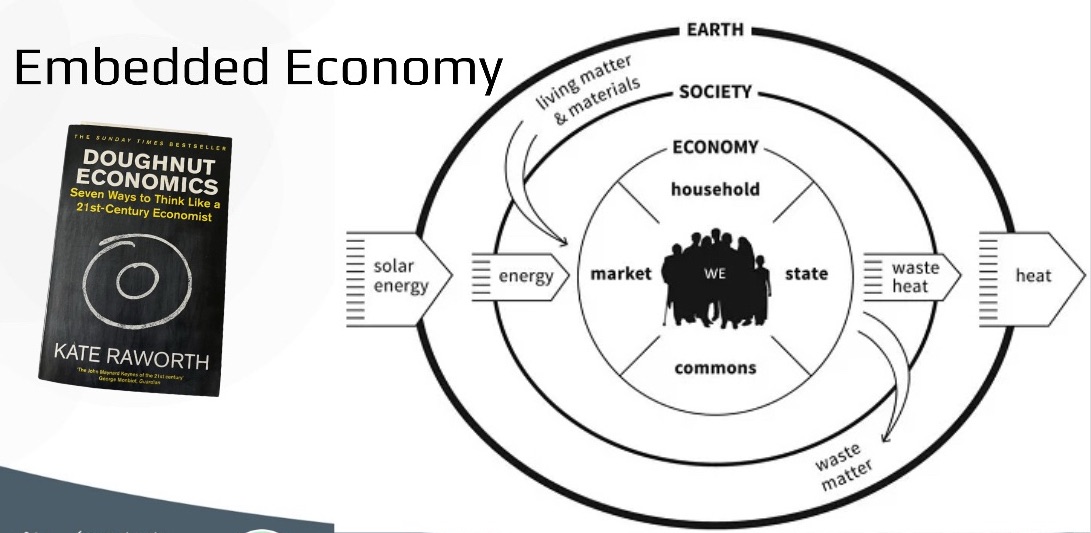
Women’s relational care and a feminist, regenerative society and economy are not fringe ideas. They are what we need to help us bridge into a low-carbon, post-growth future. These are not new ideas. They are as old as our first breath.
For context of women and feminism, I include Trans women and non-binary folk.
In a time of genocidal annihilation in Palestine, and across many other lands where people are fighting for their lives and their ways of life, it feels impossible to ignore the truth of what we have created and why it does not work.
For the past six years I’ve been living with the question
How to create a future worth living into?
It has taken me into rooms I did not know existed. I can see the system and some how grasp it. The enquiry has led me on an entanglement with living systems, complexity, modernity, economics, colonisation, knowledge, research, stories, behaviour and people, wonderful people.
Like you and your work.
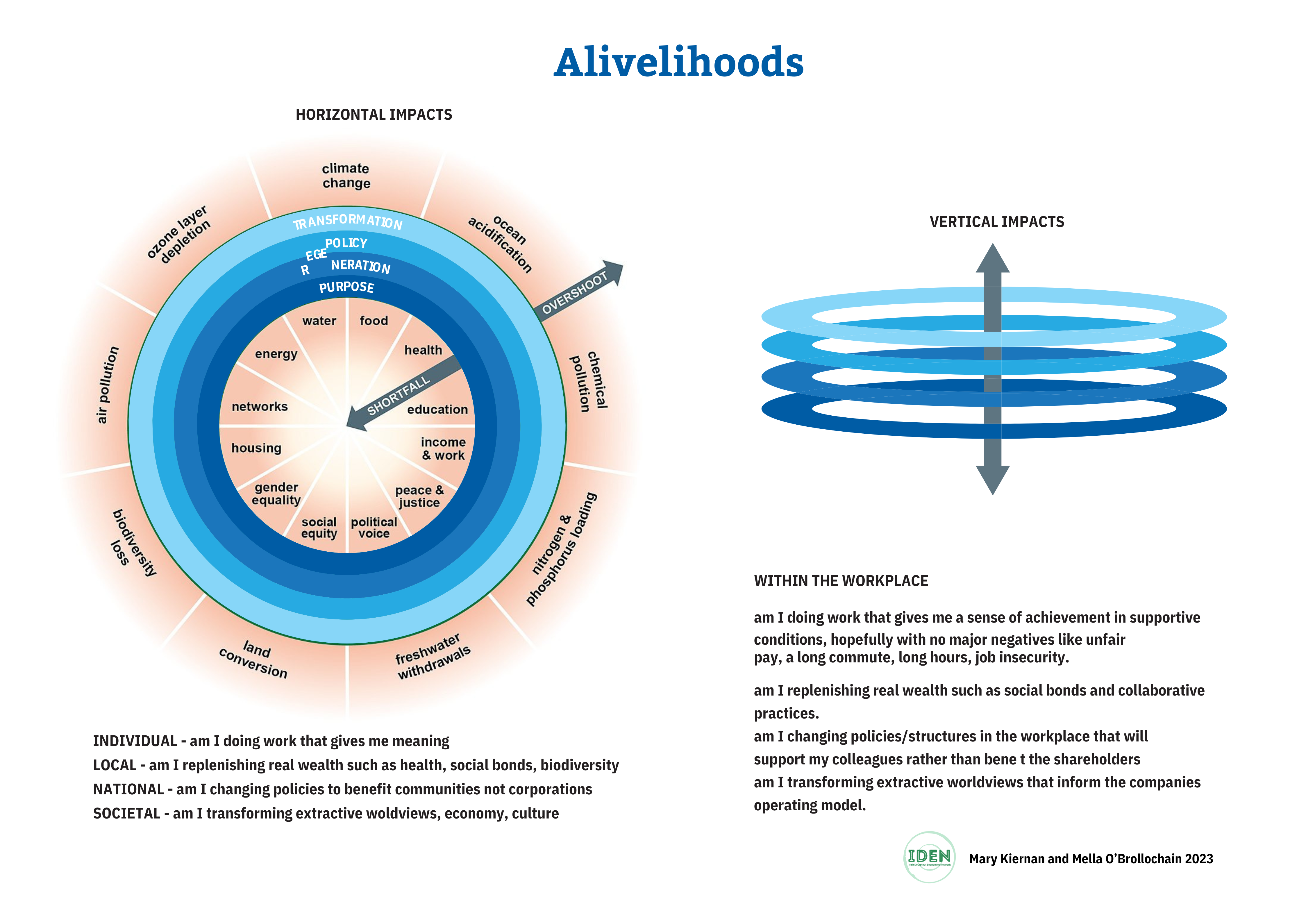
In part, it’s taken me into spaces my ancestors storied and socialised me into thinking that was where success lay, where the power was. But it’s not my truth and in reality they are hollow spaces for me.
As a creative, neurodivergent woman the practice of living, of shared care and reciprocity feels more alive. Practical, applied prototyping and making matters. I have spent too much time in my head and heart instead of simply beginning. A learned pattern of fear that I now break in sharing this with you.
When I knew what I wanted to make, I stalled. Despite having shared the concept with willing others (shout out to Malú) and getting as far as having an email and a framework ready to go. I got afraid. I convinced myself to wait. I did not have security to begin. I did not have a stable financial footing from which to build the thing I ultimately want to solve, just that.
The disparity in Irish society frustrates me. I’ve experienced and seen the systemic sexism, misogyny, and gender inequality across work, finance, and support structures. I’ve seen women left with very little when they need support most.
Women are great at getting scrappy, making it work, bootstrapping, surviving on less or barely surviving. Often at huge cost to ourselves to the point of exhaustion and burnout.
In the past few months, I’ve gotten to know women in very difficult and precarious situations, women with no family support, lone parents, disabled, neurodivergent women, migrant women, marginalised women, trans women, women with no financial security, whether short or long term, including no income or very low income. I know many neurodivergent women who are brilliant and heartful but don’t have a good source of regular income and struggle to make ends meet. For whom normative work does not work.
I keep coming back to: what might mutual aid look like if it were underpinned by feminist economic care principles, here in Ireland, among the circles of women I know?
That’s what I want to build.
What if we developed a care collective that was shaped by what we actually need, rather than what the system says is available or what is left over?
What might that look like?
Practising the Future is a way of naming how we learn, how we create conditions, build fertile soil, explore and try on the skills we may need, and how we weave the social infrastructure for our lives. One that works for us.
It is about how we collectively care, decide, support each other, build cohesion, and create resources where they matter. It is about mutual mentoring, mutual support, and making something together that feels both practical and hopeful.
I’m inspired by the breath I take every moment and:
by the work of others the wisdom of Potawatomi professor Robin Wall Kimmerer, the Celtic calendar and its rhythms, Kate Raworth’s Doughnut Economics and the Doughnut Economics Action Lab, Rob Hopkins’ What If and How to Fall in Love with the Future, Gesturing Towards Decolonial Futures (GTDF), Disco.coop, Coralus, Zebras Unite, Fibreshed Ireland, Bohs Coop, bioregioning, Feeding Ourselves.
It’s a long list after 6 years of reading, researching and curiosity.
by living systems the place where water comes out of rock and flows to the sea, a crab apple tree, the land we live on, soil, mycelium, a spiders web, plants, trees, the complex world that I cannot see nor comprehend both on this planet and across space.
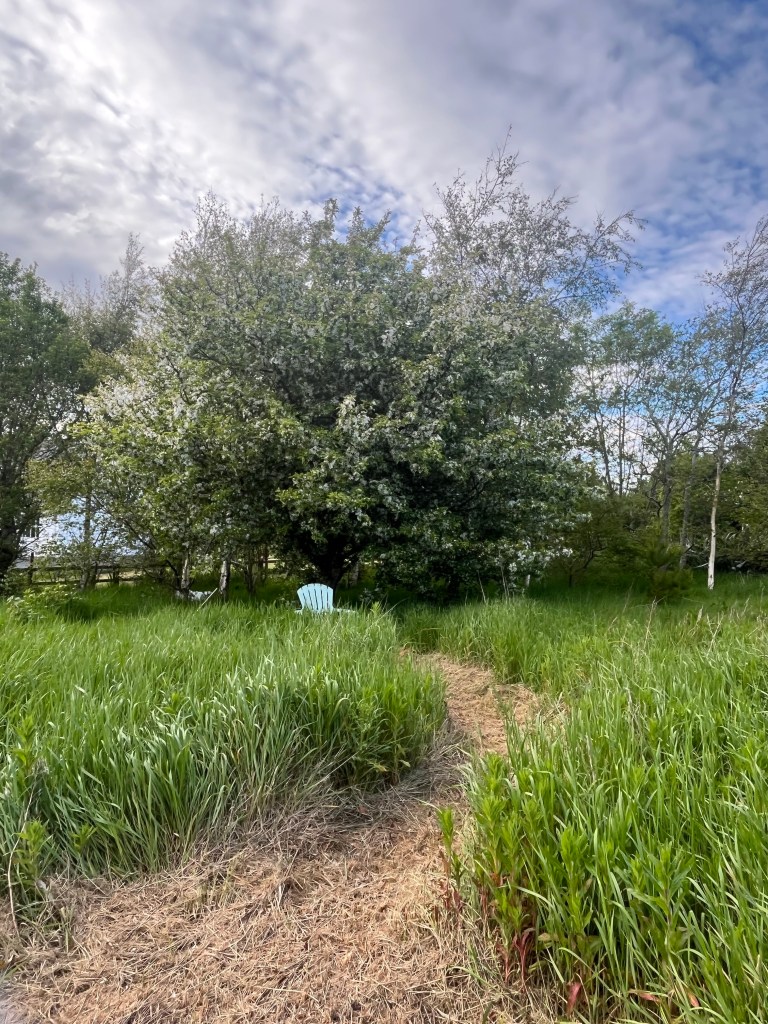
This is thrutopian work, bridge building from this moment to a future worth living into.
I can think about this stuff for years and I have.
For a while I wondered if this work was a book, a workbook… I think it’s praxis.
Creating a future worth living into is a feminist co-op, a practice, a system we create for us that works for us. It will be shaped by the folk who show up and make it together.
It’s time.
So… let’s organise. Let’s try different things.
This is my list. What’s on yours?
What it could look like
- Curiosity circles – shared learning to explore what we collectively know, or don’t know.
- Practising the Future* – an applied learning circle that could become a feminist co-op. See detailed outline below.
- Mutual aid – practical, specific care around work, finding work, time banking, and support.
- Learning, mutual mentoring, and support moving across circles, possibly intergenerational and time-banked.
- A supporters’ circle – people who want to help but don’t have the capacity for regular participation or have other things on their mind

What we might explore together
These are starting points, not a finished list:
- Ways of working: circles of care, collectivism, communication
- Decision-making: consensus, disagreement, discourse, conflict resolution
- Participatory budgeting
- Time banking
- Mutual aid
- a theory of change
- Curiosity circles: Doughnut Economics, feminist care economy, what Ireland needs now, theory of change, what a co-op is and how it works, how do we have good arguments, conflict and healthy communication, transferable skills, CV and work
- Establishing a co-op
- The 5 whys
- Being honest about what we can actually participate in, achieve and commit to
- Testing ideas, learning from them, and building from there
What would you be most interested in?
I’m going to begin sharing this with a few people before publishing it more widely.
The first participative opportunity a Practising the Future Circle .
Based on the Selfish Mothers Club that used to run in Clontarf in the 1990-2000. Ann Dunne, a mother at Gorey Educate Together, shared it with me as we were part of that community. 12 mothers meet in person every month, a tenner went in the pot, every month it went to a different person – rules were spend it on yourself not for bills or food.
So, adapting it and shaping what may work, Malú and I discussed this last October 2025, she wrote this after, I’ve put in some minor edits:
This is an invitation to be part of a year-long experiment in practising the future we want to live in. The idea is that we will organise as a co-operative of 10 women/nb folks based in Ireland and we will commit to the experiment for a year. During this year, we will be meeting virtually once a month for 1.5 hours, and in person once a quarter or bi-annually. These meetings will be about different topics, ranging from how to resource ourselves, democracy in action, community organising, creativity, etc. We will collectively decide the dates and topics during our first meeting.
We will also commit to contributing €10 per month, which will go to a collective fund. The objective of this fund is that every month, one person from the group will receive €100. This is an exercise in resourcing ourselves. For the last two months, the group will democratically decide what to spend the €200 on, or what to save it for. This is an exercise in democratic decision-making. If folk in the group are resourced they can leave the money in the collective fund.
The whole experiment is to help us learn about how to organise as a co-operative, how to make decisions democratically, think of ways to resource ourselves, and how to prefigure or practise the future we want to live in. After one year, we will have learned a lot about ourselves, about how to work as a collective, and we will all be invited to decide whether we want to keep the experiment going as it is, alter it, or drop it.
Throughout the year we will also be documenting our learnings, with the objective of creating a toolkit that can help others to organise in similar ways.
So, in terms of the commitments and participation:
- Committing to not profit individually from the specific learnings of working in this group. All profits made from outcomes of work created as a group will go to the cooperative fund.
- Committing to being an active member of this co-op for a year
- Committing to attending all 12 monthly meetings (8 virtual and 4 in person). During the first meeting, we will agree on dates and topics for each meeting, as well as who will chair each meeting
- Committing to chairing (either by yourself or in collaboration with others) at least one of our monthly meetings
- Committing to contributing €10 per month to the cooperative fund
- Committing to collaborating respectfully and with an openness to learning
- Committing to help document our learnings, creating a map or tookit
Each member will also be invited to commit to saving €10 per month in cash for themselves throughout the year. This is optional.
This is a private page published on Roisin Markham’s website.
The comment section is open. Let us know what you think.
Thanks for being here.

Updated 31 May 2026
 Roisin Markham