I don’t recall where I first heard about the course The Tools for the Regenerative Renaissance created by Phoebe Tickell and Stephen Reid, perhaps on twitter where I was active from early days to around the transition to X. But my i-notes place it April – August 2022.
That course was a rapid and immersive learning experience. I recall being deeply effected by indigenous teachers, technologist, alternative currencies, social and organisational infrastructure and the course design.
I there is still material from that course I am engaging with. I note the course was described as
focused on tools and techniques that can be used and enjoyed right now for healthier, happier lives, thriving local economies, a fairer distribution of power and resources, and the healing of the planet.
Phoebe Tickell was the first imagination activist I came across and her Moral Imagination work still inspires me. While I was familiar with many of the concepts on the course the content design, learning pattern and resourcing had as I mentioned great depth.
For example on organisational design structures I was familiar with Teal, Sociocracy, Holacracy, the course introduced me to the collective creative Enspiral who were living these practices. I’ve learnt much about cooperative working, distributed decision making and learning pods.
I brought this knowledge together with Doughnut Economics, 7 Ways to think like a 21st Century Economist practicing principle – distributed by design.
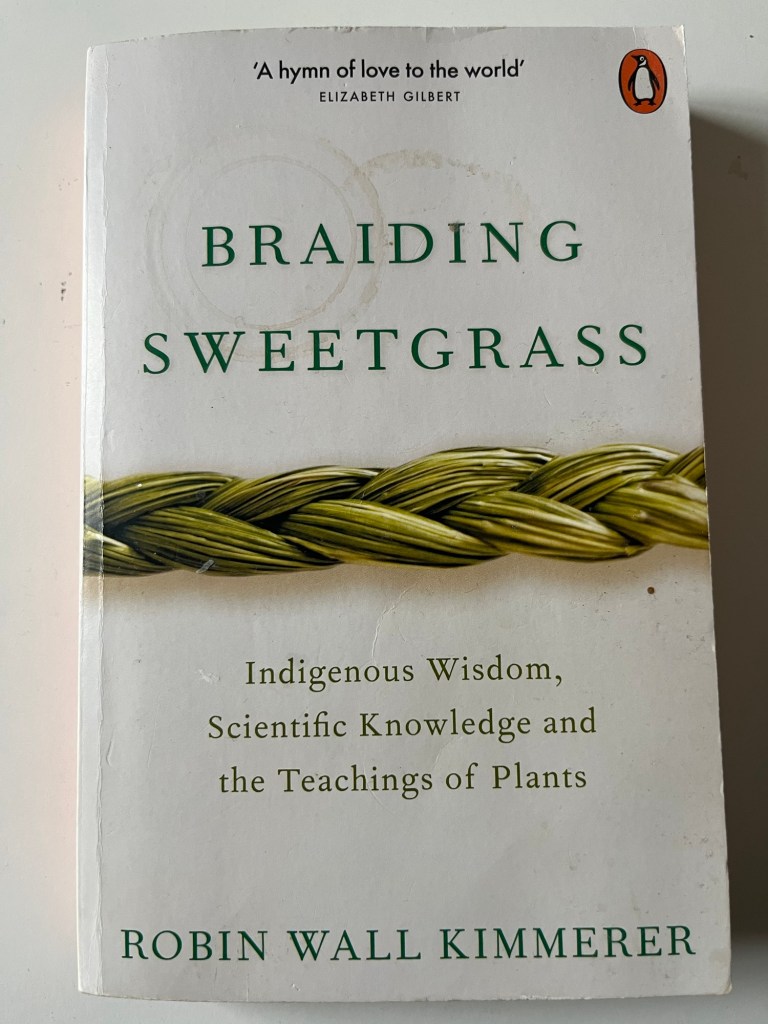
The Tools for the Regenerative Renaissance also connected me to the work of Adrienne Marie Brown, Elinor Ostrom, Joanna Macy, Woman Stands Shining ~ Pat McCabe, Precious Phiri, Charles Eisenstein, Ursula K. le Gruin, Fritjof Capra, Nora Bateson to name some but not all. Most importantly it connected me to the writing and work of Robin Wall Kimmerer, her work has been a huge influence on reconnecting with our land, plants and trees, Irish mysticism and future ancestors.
Rieki Cordon (Ecosystem Facilitator at Hypha, the organisation leading the development of SEEDS), was also involved in co-designing the course and better-than-free model of education Tools for the Regenerative Renaissance. That is a whole other layer of complexity that became a navigation to get access to the course.
The course was hosted on Dandelion, a not-for-profit social ticketing platform that was the first events platform to accept payments in Seeds.
The intention is to make the course ‘better-than-free’. We propose a small initial registration fee of 500/1500/3000 Seeds (low income/standard/abundant, approx $10/25/50). A number of zero fee scholarship places will also be available on request.
If participants complete all assignments, they receive 15,000 Seeds (approx $250, ~$40/session) at the end of the course. In the abundant spirit of the Regenerative Renaissance, we will pay people for educating themselves and activating their communities.
Part of the course was about us learning, engaging and being active on the decentralised financial and political system, SEEDS. I note from checking the website it does not look like the site has been updated since early 2025. None of the case studies have active links, I’ve not checked the discord.
It was a complicated system to engage with, purchase the crypto-currency and plug into the decision making processes. All part of the learning. Looking through the criteria for success of the Learning Program was operated completely through this regenerative and ambitious funding platform. Other leaders and teachers were paid in SEEDS and true to their word all who completed the finishing criteria for the course were paid handsomely in SEEDS. It gave us spend currency within the regenerative spaces that the platform was trying to support. From bioregions to local challenges, it was impressive they were practicing and trying to do governance, policy and funding differently, plus trying to build social and technical infrastructure to deliver impact.
The topics covered on the course included:
- Regenerative Agriculture & Thriving Local Economies
- Digital Tools for Collective Intelligence
- Decentralised Organising & Horizontal Leadership
- Co-operative Ownership
- Regenerative Money
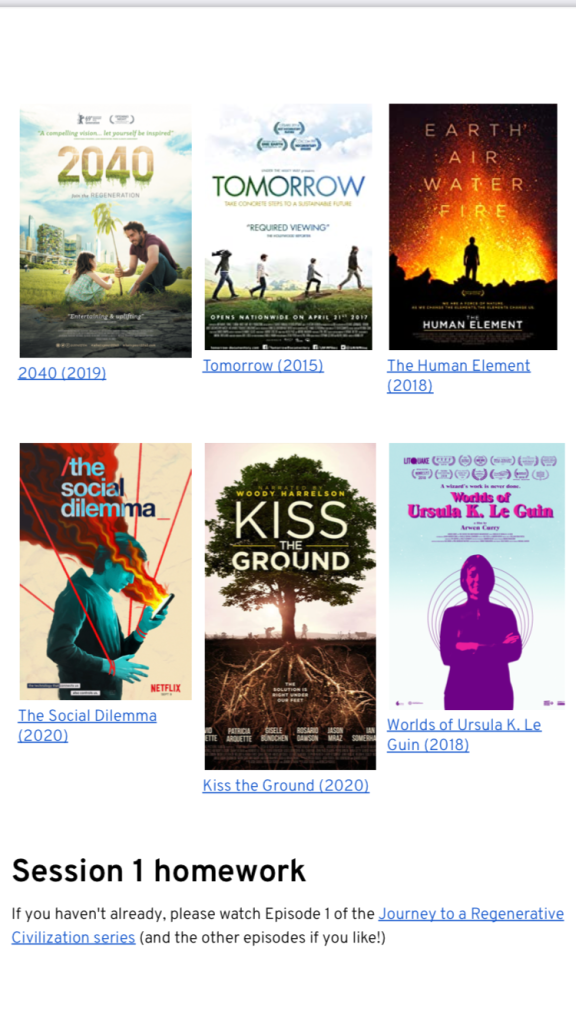
This course also had a significant library of books, films, YouTube, articles and website content.
It was during this course that I first learnt about Audrey Tang, the hacker involved in Occupy Taiwan. They developed the software I want to use in the Shared Ground Pilot.
It was there I learned about Regenerative Agriculture, Soil Health and mycelium, Open Collective, Circle, Hylo, Loomio, Obsedian and Co-Ops like Fairbnb, DAO’S and DISco. My favorite D.I.S.C.O the feminist collective DISCO.coop their manifesto is another joy bringer.
A DisCO (Distributed Cooperative Organisation) is an organisational model for cooperative groups that combines ideas and practices from cooperativism, the commons, P2P and feminist economics.
It aims to prototype new and radical forms of ownership, governance, entrepreneurship, and value accounting meant to counteract pervasive economic inequality, and offers an alternative to the aims and outcomes of DAOs (Decentralised Autonomous Organisations).
In only 6 weeks this course created foundational knowledge, it suited my tech, creative curious mind it was a riot in its self, so ridiculously good and they only ran it twice.
The idea of film as a container for low carbon futures community connection, conversation, learning and supporting the network of networks effect really took hold. It reminded me of being in college and going to the pub after the cinema to chat over the film. As design students we had opinions, films gave us a container to discuss media, communications and visual literacy. The course while remote shared content and we had the opportunity to discuss it in smaller and larger groups.
In more recent times I’ve described the course as a tin opener.
Phoebe and Stephen ran the course one more time.
Not sure I’ve ever written about it before but it was a scaffolding course, at the time I was already going deep with doughnut economics and IDEN was forming.
There are some good summaries written about it by others – interesting after all this time to read other people’s views on it.
Maybe read Phoebe’s Meduim post on it here.
 Roisin Markham