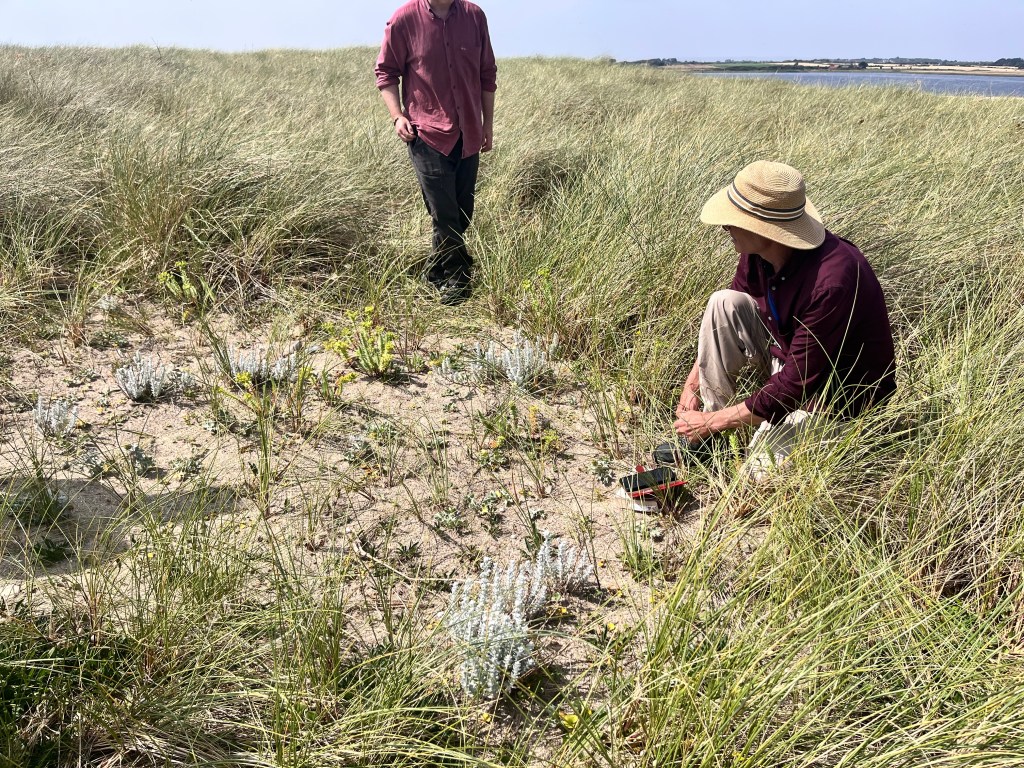
Thanks to the Biodiversity Centre for the workshop down in Lady’s Island, Wexford on Rare Plant Identification on Thursday 24 July 2025.
A note on this post, it languished in drafts for 5 months, randomly I’d edit it just ready to publish it but still not. So I am publishing before the year end. It’s good to close out the year with a post on biodiversity in the county I live in and this link to biodiversity loss and rare plants in the significant Lady’s Island area of Wexford.
Do you have the Irish citizen science biodiversity app on your phone?
Because I submit records to the app and have submitted rare plant records in the last two years I was included in an invitation email to the workshop during July. Amazing!
There were only 6 of us, it was such an honour to be able to go and I felt very lucky to have had the opportunity. The joys of being self-employed.
I’d expected there to have been more people from the area but it was on a first come first serve basis, the closest was down the road from Lady’s Island, in Cullenstown, a seasonal visitor who stays in Rosslare but lives in West Cork, a keen recorder of plants from Wicklow and some from further a field.
It was wonderful to learn from Paul Green, botanist, official record keeper of rare plants in Wexford. He says that Wexford has the most rare plants in all of the island of Ireland. I was a bit surprised as I always understood that the Burren in county Clare held that accolade. But he is the expert. His depth of knowledge and love of ecosystems was such a joy to be in the company of.
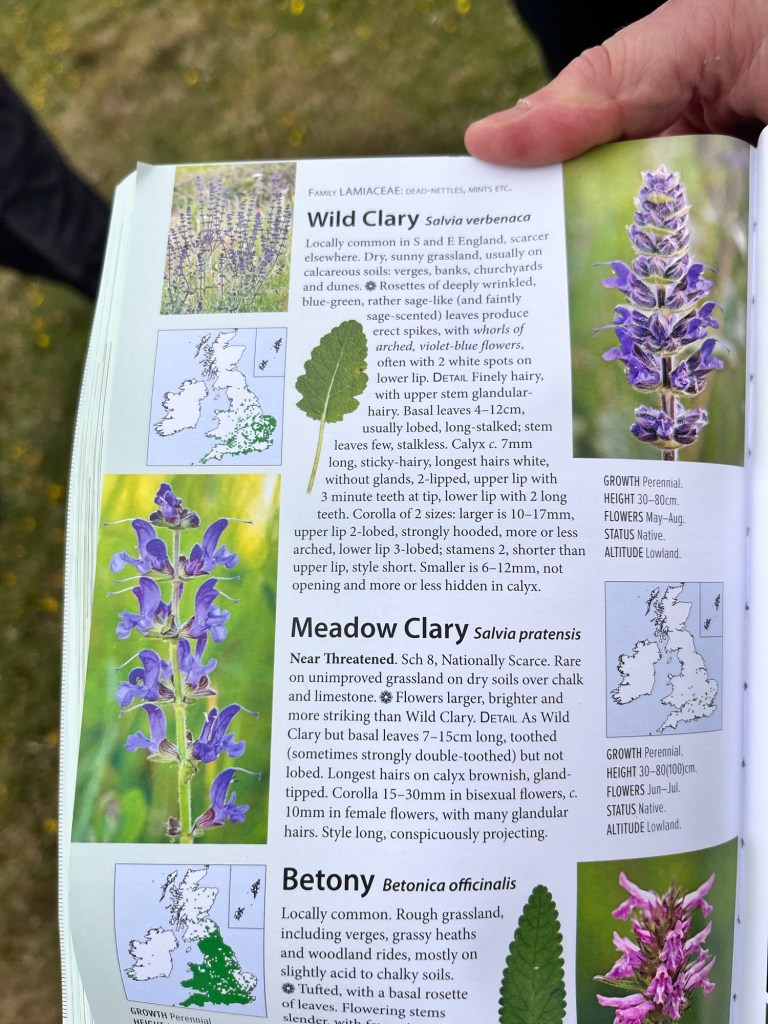
The day was planned to visit six sites and observe the following rare plants in Wexford: Wild Clary (Salvia verbenaca), Lesser Centaury (Centaurium pulchellum), Chaffweed (Centunculus minimus) and Lanceolate Spleenwort (Asplenium obovatum).
Lesser Centaruy, had died in recent heat so we did not get to view it.
We meet in Lady’s Island Car Park and after a brief introduction to the day, health and safety we bundled into two cars and away we went. I had never done anything like this before. I was not sure what to expect.
Wild Clary (Salvia verbenaca)
The Wild Clary site was in a a horizontal strip in a farmers field by the coast. The rare plant originally would have been visible and plentifully in about a 3-4km strip of coastal land. Now it’s is one field maybe less then half a kilometre.
The salvia resembles cultivars that are popular and the wild purple loose-rife that is plentiful along roadside hedgerows but there are distinct differences.
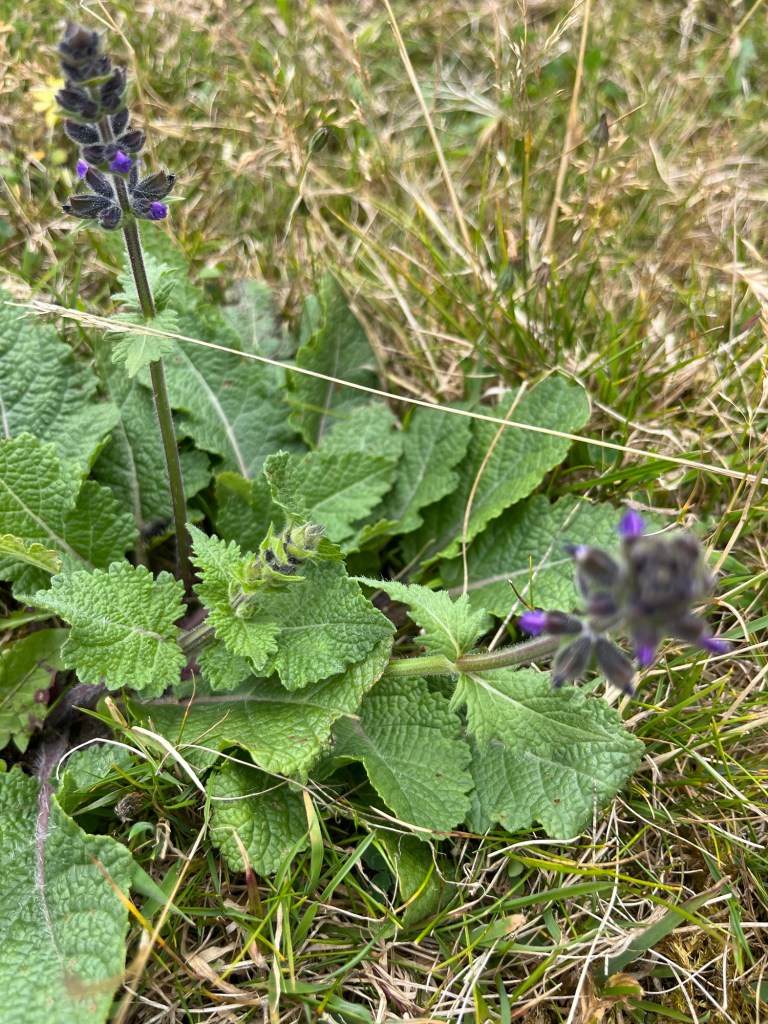
Wild clary in my observation is a stubby short plant, the leaves forming a base of shorter dense grow, the flowers do not grow much further then half a foot.
The leaves grow opposite each other on a distinctive square stem. The site was plentiful near the edge of the field closest to the shore.
The farmers field had evidence of sheep grazing and rabbits.
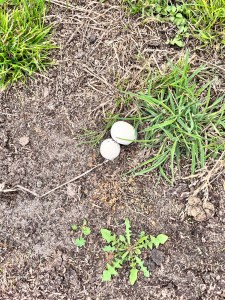
I noticed some fungi, a few small puffballs and another more typical mushroom that I could not identify.
The field had a good mix of vetches and grasses.
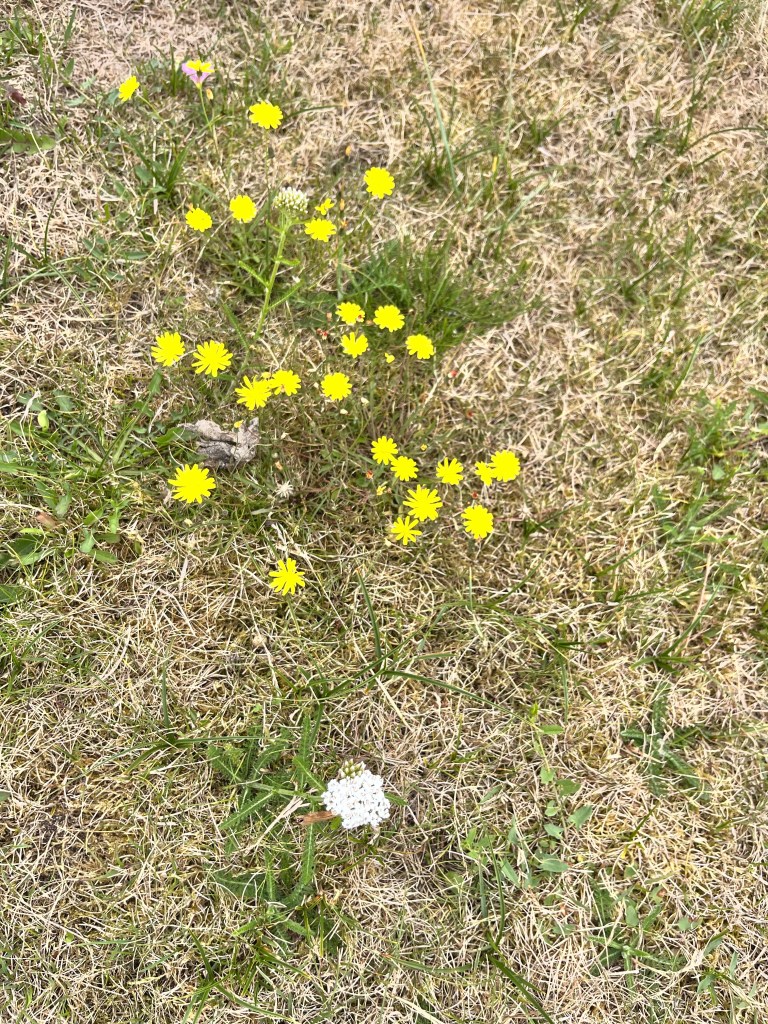
We spread out and counted the amount of Wild Clary plants in the field. We observed the site conditions.
The presence of other wild flowers, two different sorts of fungi and the rare Wild Clary plants implies this field is not sprayed nor has it been disturbed with tilling. The field was used for grazing sheep none were in the field that day and the site is on private farmland. Electric fences are in operation.
This was documented formally along with an assessment of risks to the habitat and any other observations.
This was also a workshop on documenting and stewarding sites for rare plants. At the end of the day we were invited choose a site to monitor and document.
Cottonweed, Irelands rarest plant
This plant has a fascinating history and relationship with humans and land use.
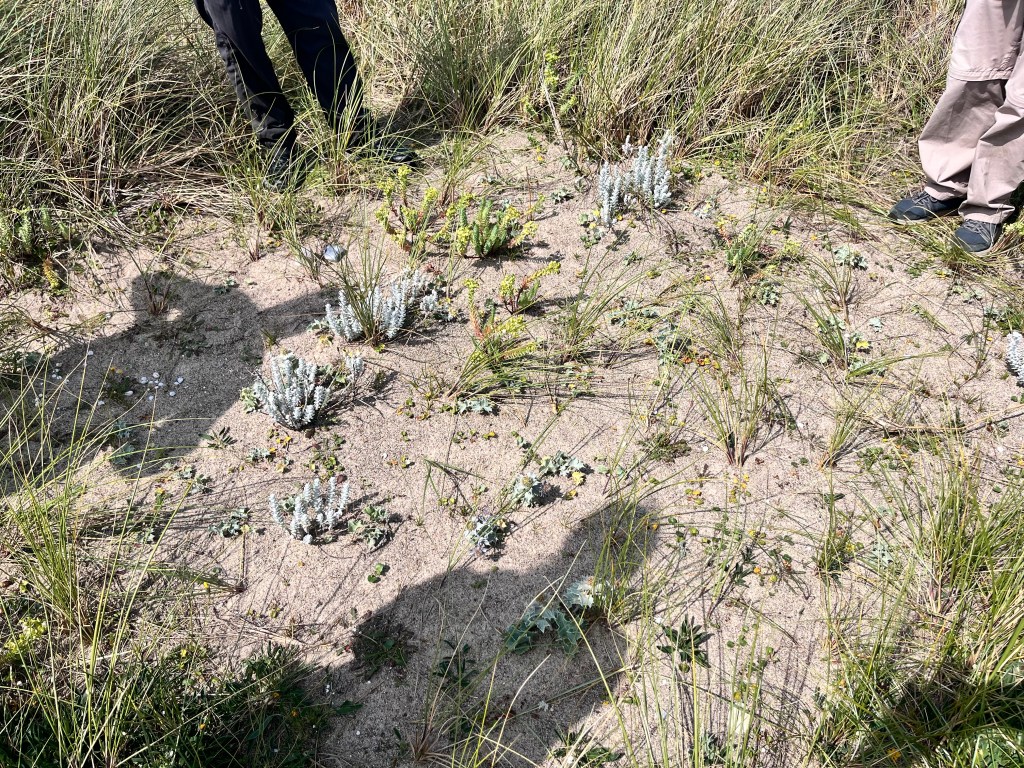
In less then 30 years this plant has declined significantly. It is considered Ireland’s rarest plant and this group of 9 – 11 remaining wild plants is the last of its kind in Ireland and the UK. It is extinct in the UK botanists come via the ferry in Rosslare to see this plant.
This plant thrived and filled the dunnes here in this part of Lady’s Island. The dunnes here used to be narrower and wave used to top over them. They have got thicker now and the waves do not reach this site. Human disturbance of the sand dunnes allowed Cottonweed to flourish. Both removal of sand, picnicking, cars and tractors across the habitat suited this plant. At one stage this grey almost furry plant (reminds me of edelweiss) covered the dunnes and made them silver grey in appearance. The flower is yellow like a flat chrysanthemum. When it was in the height of its dominance on the dunnes it must have looked spectacular. The maram grass also decreases its habitat.

In an attempt to reverse the decline of the Cottonweed and restore its habitat UCD has been conserving seed and replanting it in this fenced off site. Close to the site of the last remaining site but not beside it. This raised a very interesting discussion on gardening in wild plant conservation. Should a site be tended to, weeded, protected to allow the plant to re-establish? Or has the habitat changed so significantly that the plants time has come and gone?
Really important conversation and learning, it really challenged some of my world view on biodiversity and conservation.
In 1972 people stopped talking sand away Cottonweed started drying out. In 1998 there were 30 plants in 2025 we counted 5. This did not include the UCD conservation site. We discussed the condition of the site, risks and documented it.
Spleenwort, a fern
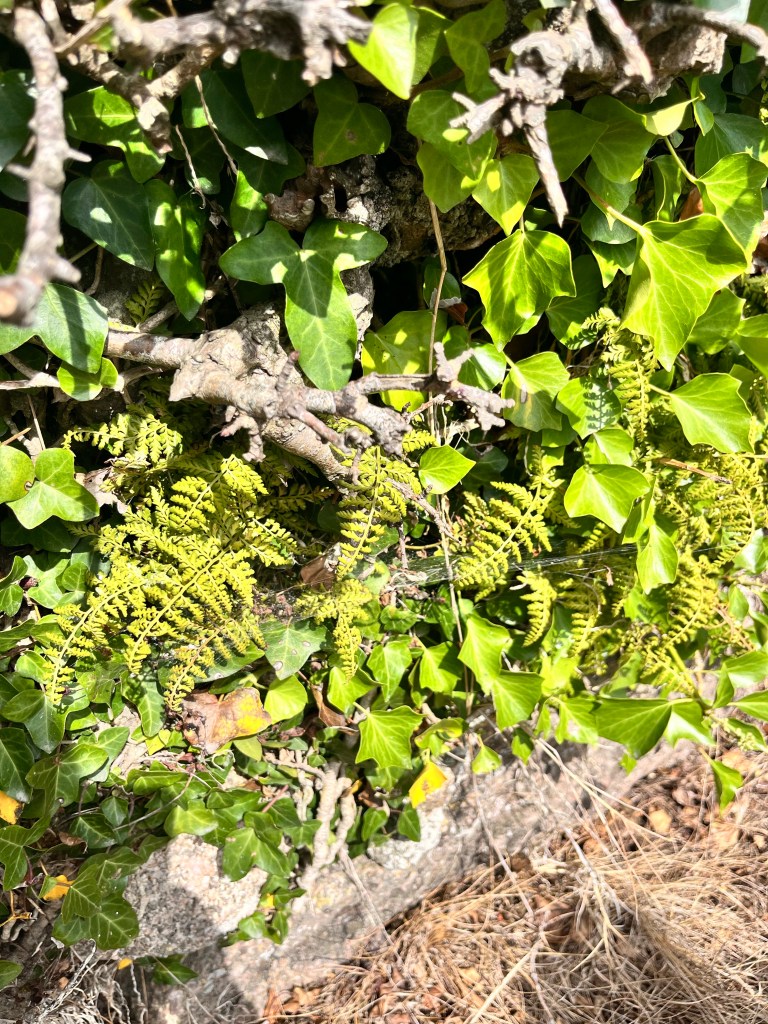
This site was literally at the side of a road on someone’s stone wall. A precarious location for this rare fern habitat.
I love ferns and was super curious about this one.
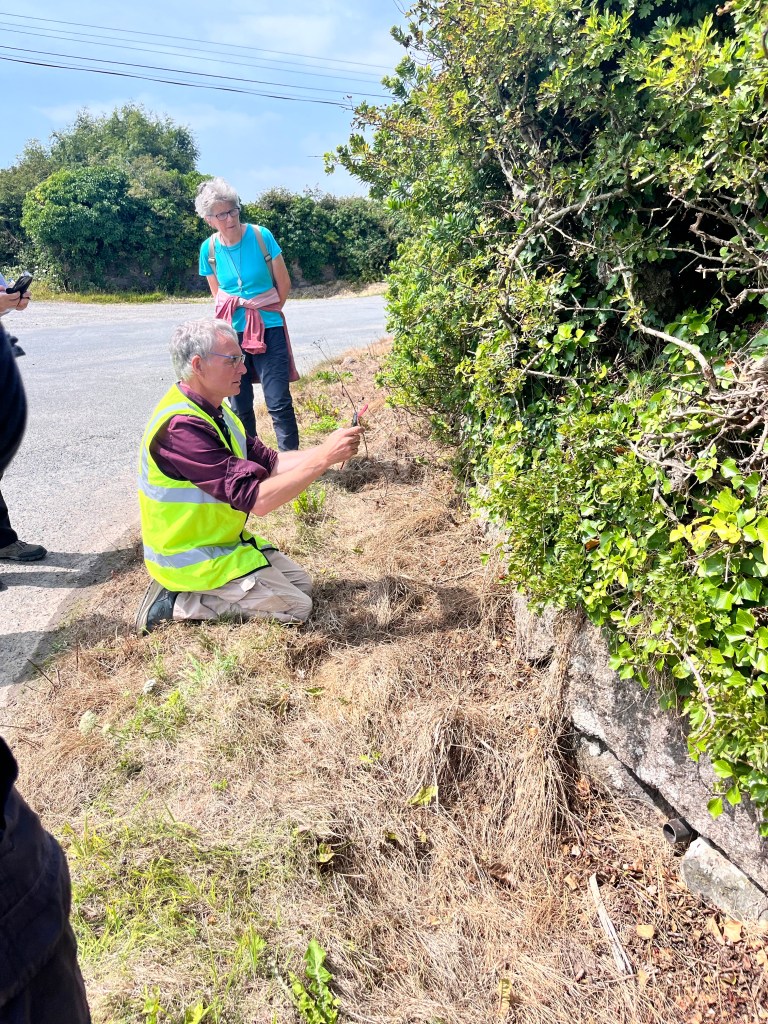
Spleenwort is yellow looking and lives on granite walls.
Extraordinary that people just drive by this site every day and don’t know about it.
Wild Asparagus
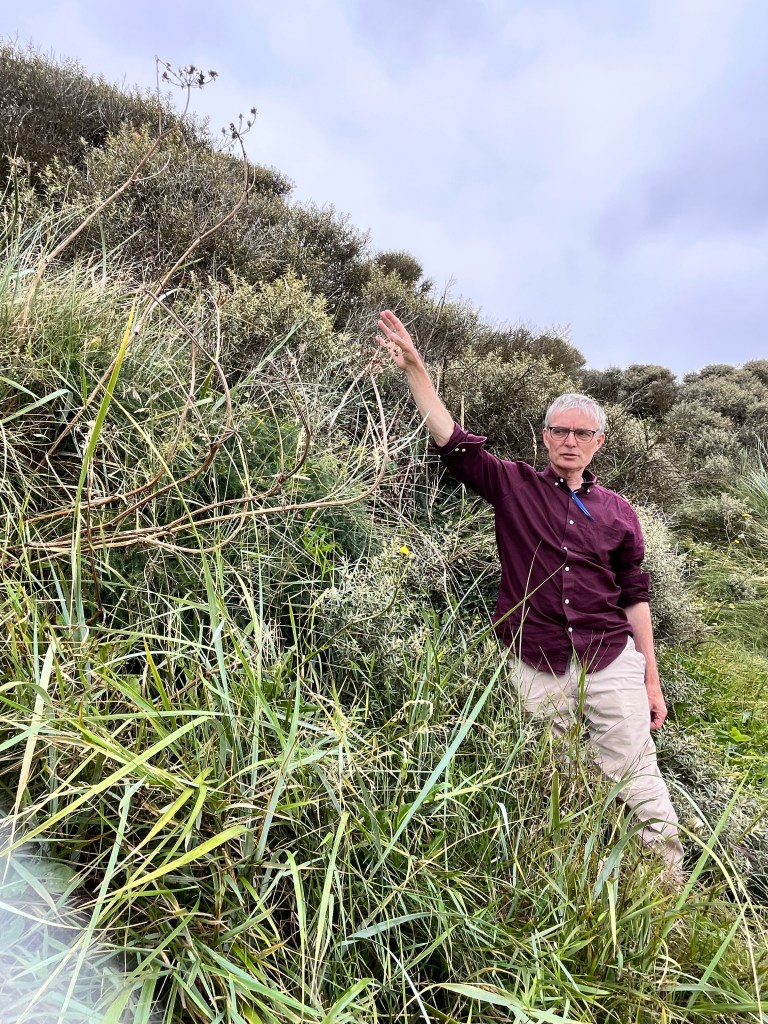
Wild Asparagus grows in the dunnes of beaches in south Wexford and seems to be well known by beach walkers and local swimmers.
It literally looks just like garden asparagus.
This is the plant I’ve chosen to steward and document on an annual basis.
Hound Tounge
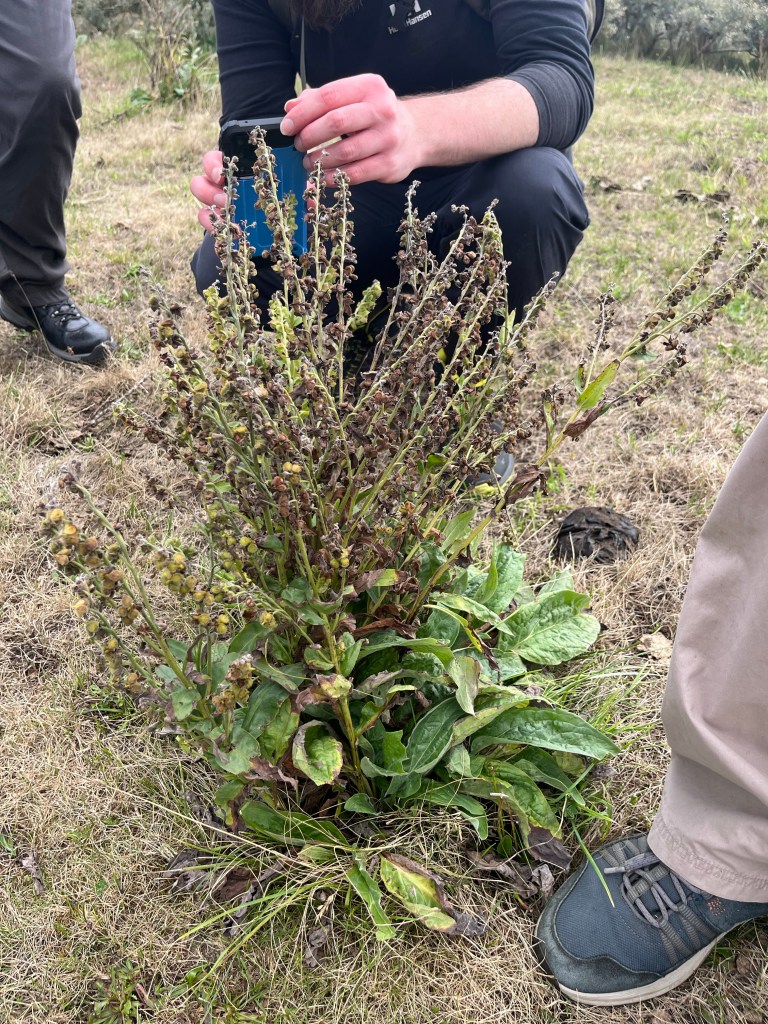
This plant was in seed, the flower is a distinctive deep red-pink colour a pink burgundy. Distinctly different from other red or pink flowers common in wild plants flowering during the summer months in Wexford.
This plant leaf looks a little like broad leafed plantain but the upright and plentiful growth is distinctive. Lots of evidence of cow grazing, and rabbit digging. Apparently sandy disturbed sites is what this plant likes.
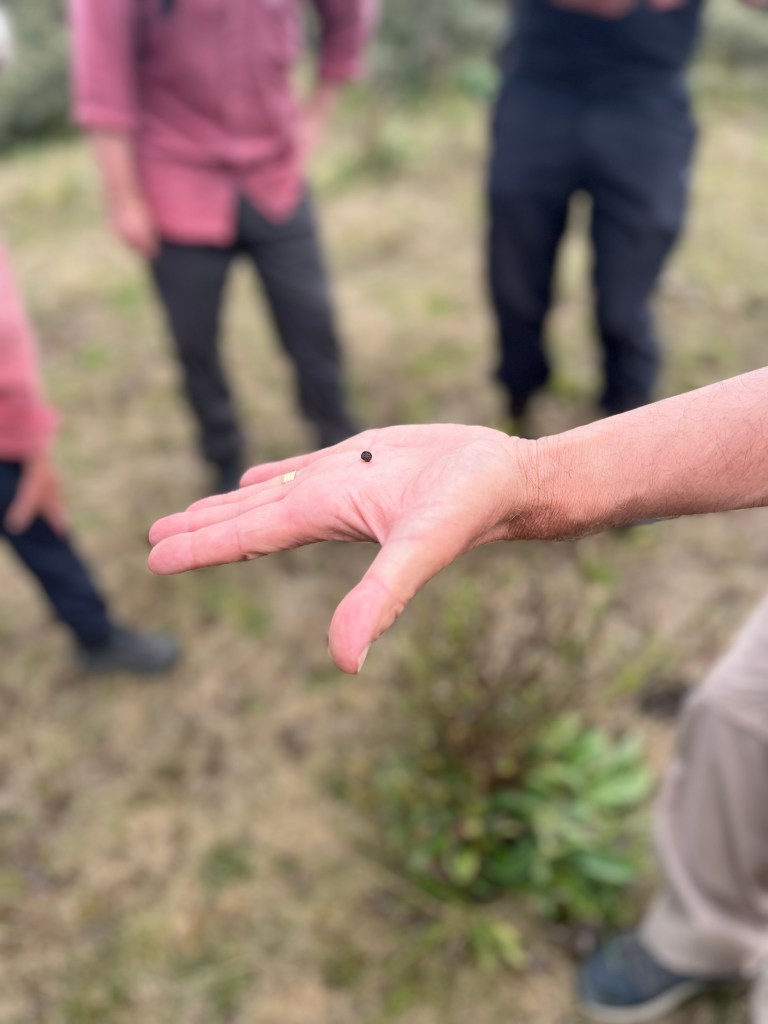
The seeds were large and had excellent sticky hooks that we found on our shoes, socks and trousers. Reminding us not to take seeds from protected plant spaces nor to cross contaminate sites.
For more information on rare plant monitoring in Ireland go to the National Biodiversity Ireland site here.
 Roisin Markham
Leave a comment