Week 29 of 52, these are my weekly work and life notes. Written without AI as a way to just write, synthesis, rift, relate, share some action, thinking & images from the week.
At the beginning of the year I choose to make this a practice to build more reflection into my work and breakthrough a writing block. In reality it’s become more than about work. With summer in full bloom around here, work is quiet and life never is.
This week a sunrise, work in Dublin delivering a corporate sustainability and circular thinking workshop, evocative intense blues in Harry Clark’s stained glass and business development continue to be shaped into reflection, insights, a question for you, resources and a view to the week ahead.
I hope you find use in these notes. Ultimately it makes visible how I work, think and live through the challenges of our times. Readership has increased and spiked recently. I’ve really enjoyed those of you who’ve reached out with comments, reactions and conversations on the different topics that resonated, asked questions all across email, social media and whatsapp. Thanks for that.
I’m glad you’re here, let’s jump in.
Reflection

This week was tempered with pushes and pulls towards business development and finding work, responding to tenders and applying for jobs. In a hemisphere on holidays the pace of response or potential from prospective clients is tempered. It is after all the middle of July.
Monday kicked off with a coffee at Cahore and a great sunrise.

At this time of the year sunrise can begin from 4:20 to first light 5:30, once the sun cracks open the horizon it rise’s quickly.
It’s such a joy to be able to go watch and experience the dawning of a day in a place like Cahore. I’m grateful for my freedom to access the sea and the privilege of living close to nature, in a country at peace. It’s in such stark contrast to Gaza, the destruction of Palestinian and the genocide of its people. So I hold that in my heart as I experience the peace and beauty of where I live and how I am free to experience it.

People love Cahore but they also trash it. Monday after a weekend of good weather is not a good look. It’s the same with our Wexford beaches. I don’t get it.
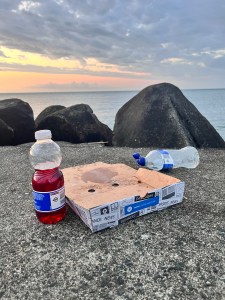
Take away boxes, coffee cups, plastic drink bottles, clothes, runners, towels strewn about. A group of crows feasting off an over flowing bin. The wind tossing through loose waste distributing plastic and other rubbish.

The disregard for a place people really enjoy going to beggars belief. The disjunct between behaviour and our environment, our summer lovin’ of being beside the sea. What do they think happens to that rubbish? It ends up in the sea and in hedges if no one cleans up. If a place is in the commons then it’s the community that uses that place whose responsibility it is to keep that place. To be in right relationship with the more than human space. That includes all of us and our relationship to the land, water, other beings and each other – day trippers, seasonal residences (second home owners, seasonal renters) and people who live locally.
Why do people litter? How do seaside communities deal with negative impacts of visitors. How can we learn from communities doing it well?

Perhaps we need to simply go back to telling people not to litter.
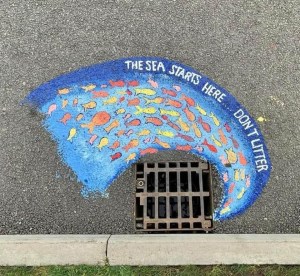
I love how British design house Hub Bub uses fun interventions like this ballot bin to clean up messy places.
The other thing that brought me joy this week was the Tending to Ending cards that arrived in the post.
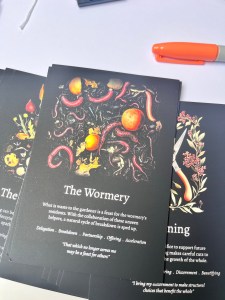
Posted in June they took over three weeks to arrive from the UK! But they are sumptuous, the quality in the hand is velvety. The themes and metaphor tie in to gardening, soil and plant care and to endings beautifully. Grief has been a companion to my climate work. Prior to that I think maybe in 2016 I became interested in endings from a digital perspective. We are excellent at onboarding people to digital experiences but brutal at off-boarding them. For a while I followed this conundrum around. Using it to do better work ~ understand process, design, deliver and leave organisations. The end of something does not mean the end of everything. In western ideology, religious belief systems death is not even the end. In scientific terms matter changes, energy is transferred. This shift in states is perhaps the essence of good endings and attending to them.
In that vein I came to know Joanna Macy’s work in 2020. I learned her spiral and attending to grief through it. Sad news for all of us who have learned from her and her work, she died this weekend, 96 years old. Her legacy is immense.
Thank you for the life you shared with us.
Joanna, go raibh maith agat as an saol a chaith tú linn.
The Tending to Endings cards for me come from the thinking houses of the work that reconnects, decolonisation and hospicing modernity, building in good ruins, mycelium, soil health and gardening wisdom.
I have created work around changes forced or embraced across the spectrum of art, tech, consultancy, education, coaching and mentoring. Yesterday I came across the prototype workbook for endings that I made about 3 years ago. I handmake an endings workbook for people as a gift. People going through transitions, divorce, losing a career, end of relationships, big identity changes and life transitions. It’s a workbook ritual of attending to and noticing change as an embodied creative practice. It’s always felt important to make the workbooks by hand and it has to travel to the person by post.
Thursday I commuted to Dublin by train to deliver a corporate sustainability workshop on Circular Thinking. It went really well, I really enjoy delivering that workshop. This time I gave the group choices about time use in the workshop we explored feedback from people who’d delivered it to their teams, how they will use the circular thinking toolkit and creating confidence to offer a session to their own teams. I designed the session last year and it’s the third time I’ve run it. It was great to hear their feedback and questions.
I had some time to go visit the National Gallery of Ireland before getting on a train back home. I probably take it completely for granted that visiting our national museums and galleries is free. I remember being a kid in that gallery. My favourite paintings have changed and I also love the National Portrait collection it now houses.
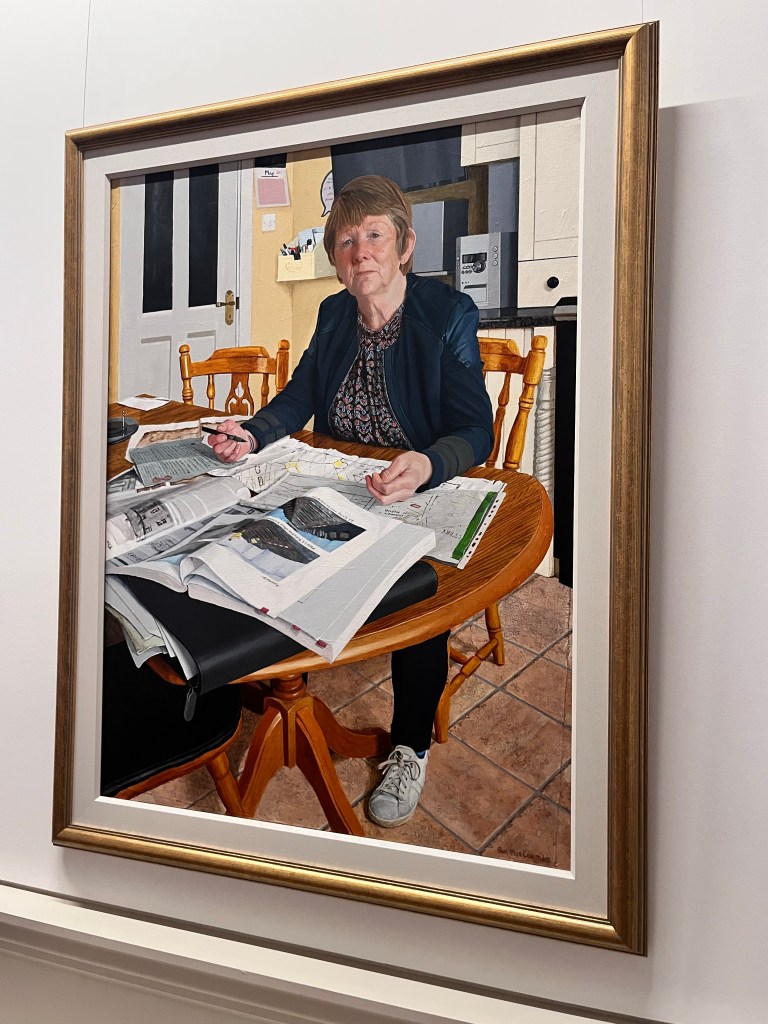
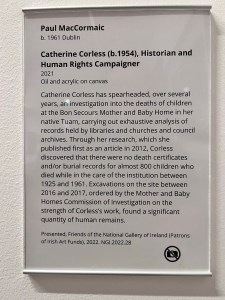
I gravitated towards this exceptional portrait of Catherine Corless whose relentless pursuit of the truth uncovered the awfulness about the Tuam Mother and Baby Home. Instantly recognisable she’s been on my mind since they started the excavation work. The Irish people owe her a huge debt.
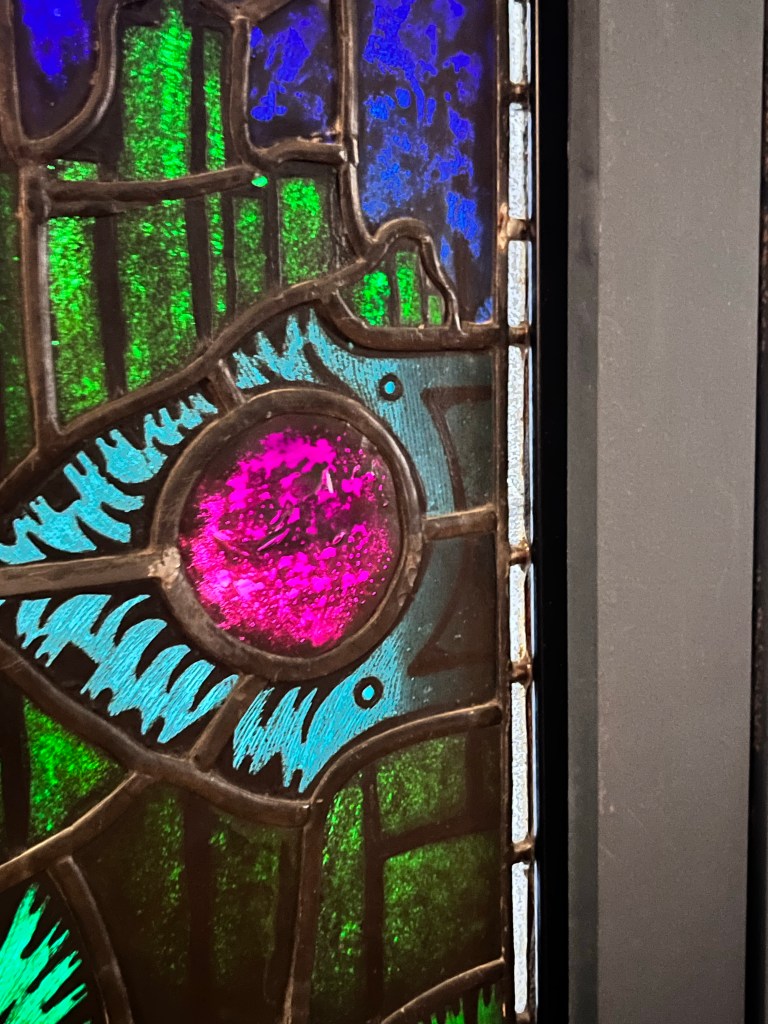
I visited one of my favourite displays, a darkened room with the illuminated stained glass windows of Harry Clarke. In May I’d brought the international visitors on the Co-design project into see the intense stained glass windows of Harry Clarke in the church on Thomas Street. The RC churches where I grew up and in Ballygarrett our local village also have his spectacular stained glass windows in them.


Insights
I am really interested in how and why people act certain ways, behavioural science and economics are themes I work with. In part because of how understanding behaviour can lead to the design of better services and products but also because insights to culture and social norms. Anywhere people group and their collective behaviour shapes a thing I’m curious about that.
I met an anthropologist a while ago and we had a very interesting chat about deliberative democracy. Deliberative living and deep care of how and where we live is important to me. It’s probably one of the reasons I’m so passionate about doughnut economics. I see it as a framework that allows us to hold complexity and work through balance.
In designing and delivering a workshop, toolkit and teaching people how to use it, I make complex ideas accessible. It’s great to be able to hear back from people using the toolkit and workshops about how tangible and easy it is. I loved that someone asked the “So what question” it shows maturity and increased confidence with the topic. On subjects like GHG, net zero, carbon emissions, circular economy, green procurement and human rights in the supply chain it’s important that information is right, accessible and appropriate for that workplace.
Art is a refreshing gateway to other realms, futures and possibilities. In taking all of those influences and letting my creativity run I in turn want the depth and intensity of Clarke. In the garden the fragrance of Rosa Rugassa is only seconded by the increasing number of large rosehips. It seemed fitting to push and pull two images edited, merged, edited some more as my small tribute to Harry Clarke’s magnificent skill and craftsmanship. His intense use of colour and the celebration of his work. A simple nod to him.
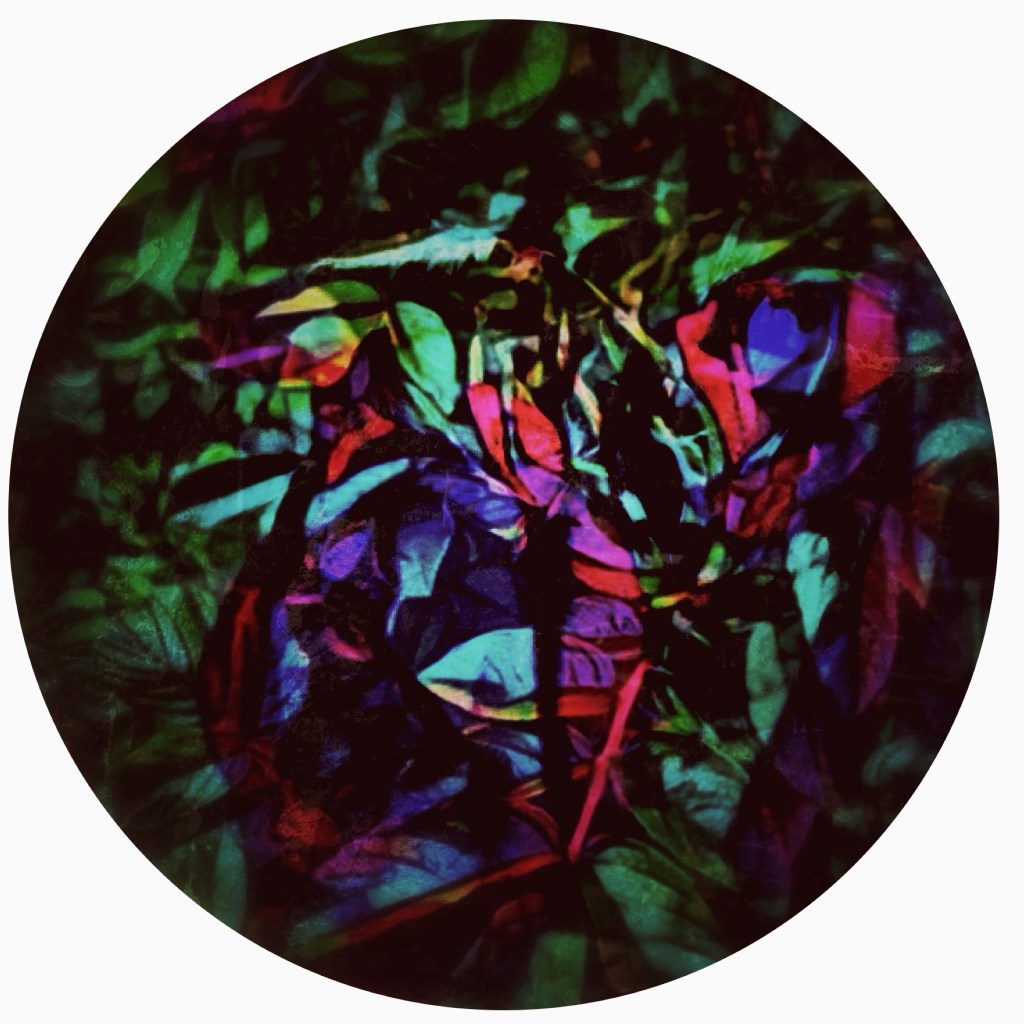
Photography, digital editing
Roisin Markham July 2025
Beginning well does not always happen with the end in sight. Perhaps that is the key my classic design education has given me, to deeply understand, to imagine the outcome. To define pathways us to get there and make the destination and map visible to all.
Neurodivergent people are the ones who will transform us from business as usual into our new low carbon futures.
“The deficit-centred view of dyslexia isn’t telling the whole story. This research proposes a new framework to help us better understand the cognitive strengths of people with dyslexia.”
Dr Helen Taylor
Cambridge researchers studying cognition, behaviour and the brain have concluded that people with dyslexia are specialised to explore the unknown. This is likely to play a fundamental role in human adaptation to changing environments. Jane Ní Dhulchaointigh and I are working on future visioning get-aways for corporate clients and she mentioned this new research.
“Striking the balance between exploring for new opportunities and exploiting the benefits of a particular choice is key to adaptation and survival and underpins many of the decisions we make in our daily lives,” said Taylor.
Exploration encompasses activities that involve searching the unknown such as experimentation, discovery and innovation. In contrast, exploitation is concerned with using what’s already known including refinement, efficiency and selection.
“Considering this trade-off, an explorative specialisation in people with dyslexia could help explain why they have difficulties with tasks related to exploitation, such as reading and writing. “Striking the balance between exploring for new opportunities and exploiting the benefits of a particular choice is key to adaptation and survival and underpins many of the decisions we make in our daily lives,” said Taylor.
Taylor, H., & Vestergaard, M. D. (2022). Developmental Dyslexia: Disorder or Specialization in Exploration? Frontiers in Psychology, 13, 889245. https://doi.org/10.3389/fpsyg.2022.889245
I am beginning to edit more, inviting a curiosity towards writing deleting discerning of the words and stories. It’s like my experience is scaffolding, I get it people want to see the final building not how it was constructed.
A question for you?
How do you deal with endings?
Resources
We need more river swimmers in Ireland, looking at pristine waters through a different lens and using working legalisation to bring our rivers back to life.
Doughnut Economics, Community indicators of living well There are great things happening in the grassroots community with DEAL this month.
DCEE, Climate Conversations 2025 Consultation open until 22 September 2025
From BOHS school of Make it so good you automatically want to share it?
https://knowyourenvironmentalrights.ie/

The Swiss have built and launched a LLM, open sourced and for public good. I shared a post on Linkedin about this last week. You can read it here.
“it helped us rehearse what it might mean” from the amazing Legislative Theatre work that explores democracy as a tarot deck with young people in Spain, I found this work so inspiring.
Also from Platoniq, Imagining (and designing) common futures through creativity. You are in the year 2050. What do you see around you? How are the people? What is the political system? What is the state of the ecosystems?
I’d love to combine the brilliance of this work with my Shared Ground Civic Listening Project.
A view to the week ahead
I’m excited to be working on two big proposals for new business and a Rare Plant Monitoring Scheme Workshop with the National Biodiversity Data Centre on Thursday.
We have a Save Lady’s Island Lake meeting in Thursday evening.
I’ve also to progress to make on some doughnut economics events with communities and a corporate talk.
I’m still trying to get the IDEN email sorted! We will start planning the Global Doughnut Festival soon too.
There is another significant family celebration this week that I am looking forward to.
In the mean time back to business, how can we be of service? we have plenty of capacity:
BDT CONSULTANCY Core Services
- Resilience & Adaptive Leadership
- Regenerative Systems Leadership & Design
- Climate Action & Circular Economy Capacity Building
- Multi-Stakeholder Facilitation & Engagement
- Strategic Programme Delivery & Impact Innovation
You might also enjoy some of the previous posts:
- Leaning Into the Mess
- What are you trying to make sense of right now?
- Rock and reed
- Questions with only big answers
- Emergent demands good containers held well.
Till next week.
 Roisin Markham
Leave a comment